














































 | 03/09/26 |
Animating the Sacred
Tribal Religion and the Politics of Presence in Museum Spaces - Reflections from IGRMS
Introduction
Tribal religions across India embody a worldview where nature, society, and divinity form a seamless continuum. Sacred groves, ancestor shrines, totems, and ritual objects are not symbolic substitutes but living extensions of the spiritual realm. For instance, the Santhal Jaher Than (sacred grove) serves as the ritual center where village spirits are propitiated; Gond communities worship clan deities at pen shrines; and Baiga ancestor stones are treated as active presences requiring periodic offerings. Such sites embody an ontological continuity between humans, land, and divinity rather than a separation between the sacred and the material. When these elements enter museum spaces, they risk dislocation—the sacred becomes aesthetic, and ritual becomes display. The Indira Gandhi Rashtriya Manav Sangrahalaya (IGRMS), Bhopal, proposes an alternative imagination: redefines this dilemma by curating “living” cultural environments where tribal religion is animated through spatial, ritual, and participatory practices.
Established in 1977 as an autonomous institution under the Ministry of Culture, Government of India, IGRMS was conceptualized as “Manav Sangrahalaya” a museum of humankind. Its mission emphasizes that “culture is dynamic with time and space” and that museums must reflect “the life and culture of living communities.”
This redefinition situates IGRMS within a new museological paradigm one that privileges interaction, co-creation, and community agency. Unlike conventional museums that house objects behind glass, IGRMS reconstructs entire cultural landscapes.
Its sprawling open-air campus at Shamla Hills includes prehistoric rock shelters, ecological trails, and reconstructed tribal villages. The museum’s design interlinks the prehistoric, the ethnographic, and the contemporary suggesting continuity rather than rupture. Exhibitions such as Tribal Habitat, Himalayan Village, Desert Village, and Coastal Village offer immersive encounters with India’s cultural landscapes, while Veethi Sankul, the indoor complex, narrates the “human odyssey” through 12 galleries that trace biological evolution, belief systems, ethnic arts, and culinary traditions.
This article draws on multiple field visits to the Indira Gandhi Rashtriya Manav Sangrahalaya (IGRMS), Bhopal, conducted between 2019 and 2025. The analysis is based on exhibition walkthroughs, site observations, informal conversations with curators, artisans, and community representatives, and a review of museum catalogues and institutional documents. A qualitative, ethnographic approach has been adopted to understand how tribal religious practices are spatially and materially curated within museum settings.
Curating the Sacred: Spatial and Ritual Dimensions
Among its many exhibits, Tribal Habitat and Sacred Groves stand out for their engagement with tribal spirituality.
The Tribal Habitat, the first open-air exhibition at IGRMS, presents forty life-size houses, shrines, and dormitories representing communities from Odisha, Jharkhand, Nagaland, and Arunachal Pradesh. These structures are not replicas but collaborative reconstructions, made with community artisans using traditional materials and techniques. They embody the sacred cosmology of habitation where the house is not merely a shelter but a ritual organism that mediates between the human and the spirit world. For example, the reconstructed Santhal house includes a sacred hearth (chulha) regarded as the dwelling place of domestic spirits, while painted wall motifs of birds, vines, and fertility symbols invoke protection and prosperity. In the Kutia Kandha dwelling from Odisha, a designated corner is reserved for ancestral offerings and seasonal rituals. These architectural details demonstrate how habitation itself is structured as a sacred practice rather than merely a functional shelter.
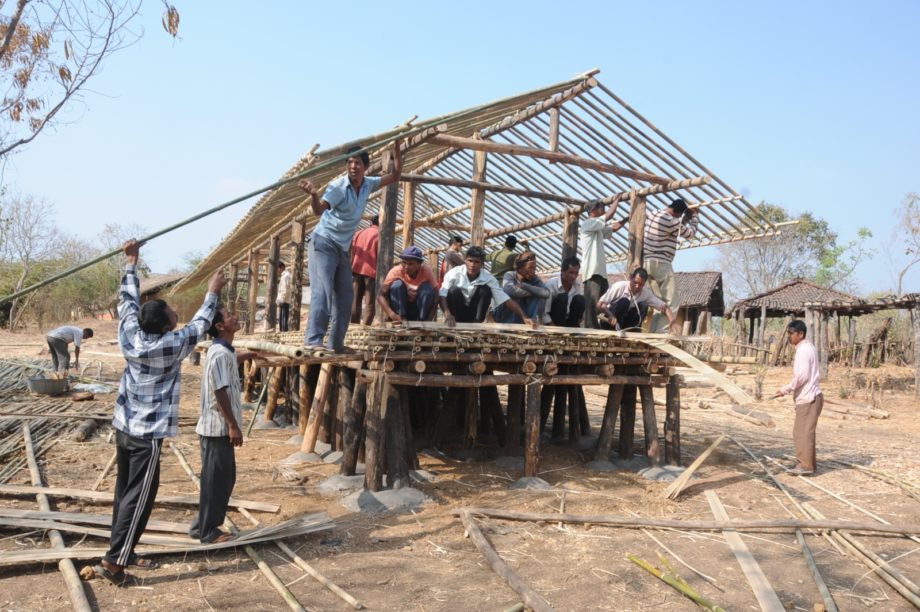
Fig. 1 Tribal Habitat under construction by tribal artisans at the Indira Gandhi Rashtriya Manav Sangrahalaya (IGRMS), Bhopal, showing the collaborative reconstruction of life-size tribal dwellings using traditional materials and indigenous building techniques. Source/Copyright: Courtesy of Indira Gandhi Rashtriya Manav Sangrahalaya (IGRMS), Bhopal.
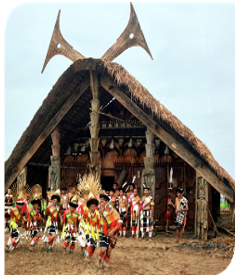
Fig. 2 Traditional Morung (youth dormitory) of a Naga tribe, reconstructed at the Tribal Habitat, Indira Gandhi Rashtriya Manav Sangrahalaya (IGRMS), Bhopal, showcasing the ceremonial architecture and communal institution central to Naga social and ritual life. Source/Copyright: Courtesy of Indira Gandhi Rashtriya Manav Sangrahalaya (IGRMS), Bhopal.
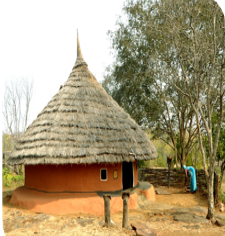
Fig. 3 Life-size reconstructed dwelling complex of the Gadba tribe from Odisha at the Tribal Habitat, Indira Gandhi Rashtriya Manav Sangrahalaya (IGRMS), Bhopal, demonstrating indigenous architectural traditions adapted to the local environment. Source/Copyright: Courtesy of Indira Gandhi Rashtriya Manav Sangrahalaya (IGRMS), Bhopal.
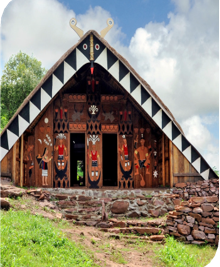
Fig. 4 Traditional Morung (youth dormitory) of the Maram Naga tribe from Manipur, reconstructed at the Tribal Habitat, Indira Gandhi Rashtriya Manav Sangrahalaya (IGRMS), Bhopal, highlighting the ceremonial and educational role of the youth dormitory in community life. Source/Copyright: Courtesy of Indira Gandhi Rashtriya Manav Sangrahalaya (IGRMS), Bhopal.
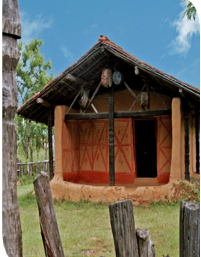
Fig. 5 Traditional Saora house from Odisha, reconstructed at the Tribal Habitat, Indira Gandhi Rashtriya Manav Sangrahalaya (IGRMS), Bhopal, illustrating the community’s distinctive earthen architecture and sacred domestic space. Source/Copyright: Courtesy of Indira Gandhi Rashtriya Manav Sangrahalaya (IGRMS), Bhopal.
The Sacred Groves exhibit deepens this spiritual ecology. Sacred groves, known variously as Sarna (central India), Kaavu (Kerala), Devrai (Maharashtra), or Oran (Rajasthan), are community-protected forest patches believed to house guardian spirits or deities. The Sarna functions as a collective ritual site for sacrifices and festivals; the Kaavu often enshrines serpent deities; the Devrai preserves old-growth forest as divine territory; and the Oran sustains both pastoral livelihoods and ancestral worship.
By replicating groves from eight states Kerala, Meghalaya, Manipur, Maharashtra, West Bengal, Tamil Nadu, Rajasthan, and Chhattisgarh IGRMS creates an eco-religious network within the campus. Each grove was ritually inaugurated by members of the respective community, ensuring that spiritual continuity accompanied physical construction. Here, the museum ceases to be a neutral space it becomes consecrated through collective presence.
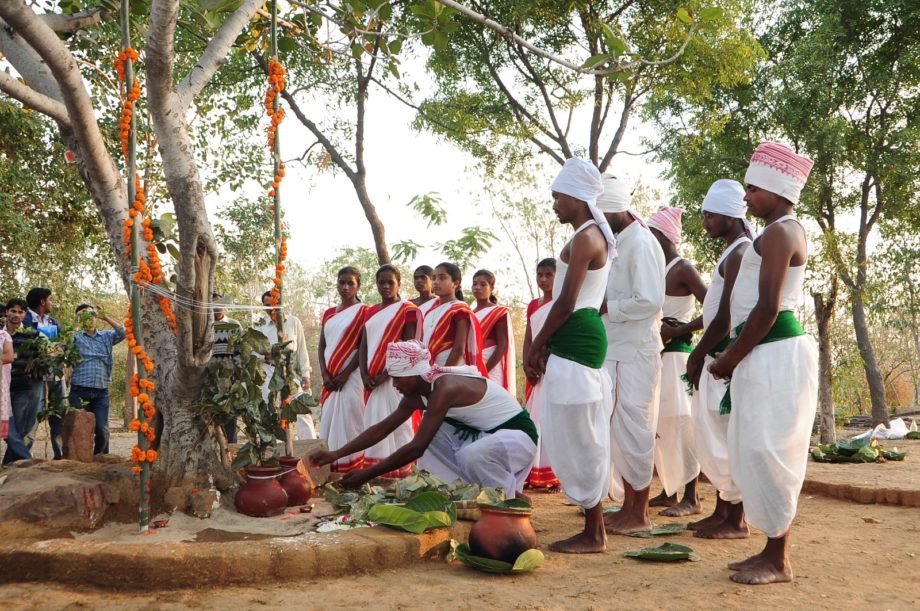
Fig. 6 Recreated sacred groves exhibit at IGRMS with ritual boundary markers and offerings. Sacred Groves of Sarna Jharkhand and Chhattisgarh.
Source/Copyright: Courtesy of Indira Ghana Rashtriya Manav Sangrahalava (IGRMS), Bhopal.
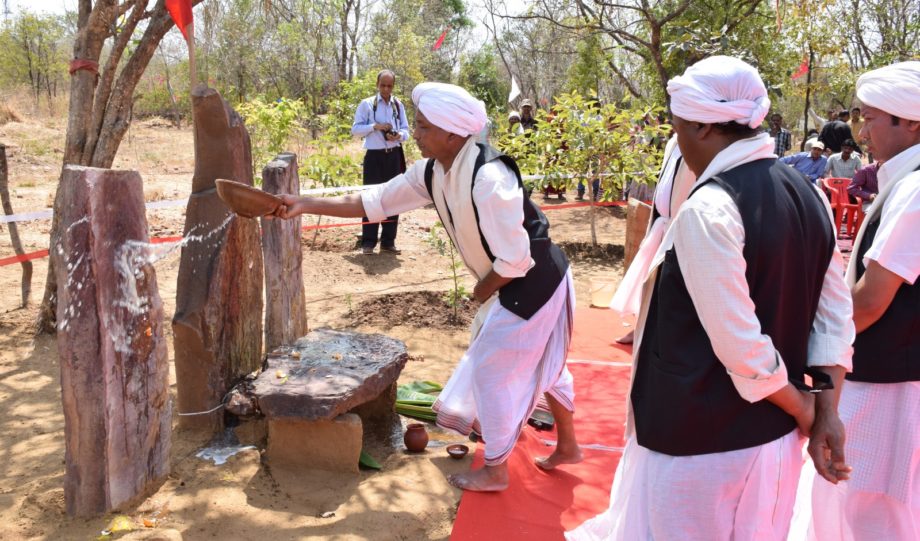
Fig. 7 Recreated sacred groves exhibit at IGRMS with ritual boundary markers and offerings. Sacred Groves of Sarna Jharkhand and Chhattisgarh.
Source/Copyright: Courtesy of Indira Ghana Rashtriva Manav Sangrahalaya (IGRMS), Bhopal.
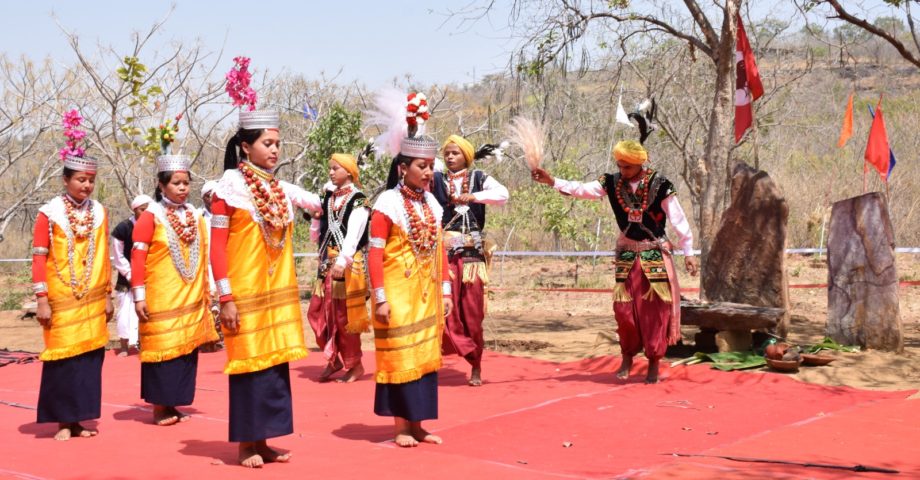
Fig. 8 Recreated sacred grove exhibit at IGRMS with ritual boundary markers and offerings. Sacred Groves of Meghalaya-Maw Bu Khar.
Source/Copyright: Courtesy of Indira Gandhi Rashtriya Manav Sangrahalaya (IGRMS), Bhopal.
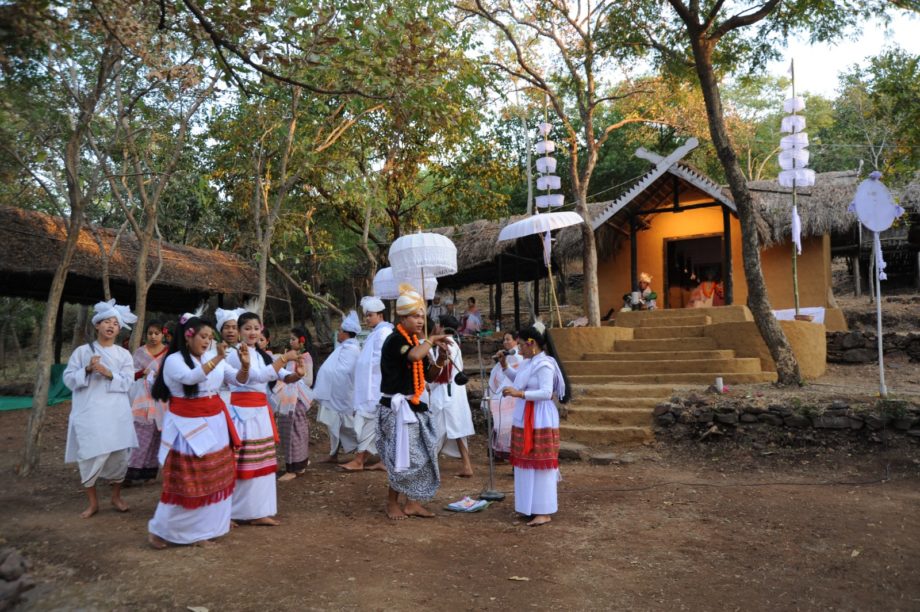
Fig. 9 Recreated sacred grove exhibit at IGRMS with ritual boundary markers and offerings. Sacred Groves of Manipur.
Source/Copyright: Courtesy of Indira Gandhi Rashtriya Manav Sangrahalaya (IGRMS), Bhopal.
Myth, Memory,and Materiality
In the Mythological Trail exhibition, IGRMS curates stories of origin through material media, terracotta, such as wood, stone, and metal. The 12-foot Lohar Iron Gate references the origin myth of ironsmith communities, which narrates that iron-working knowledge was divinely revealed to ancestral smiths, thereby sacralizing their craft. Similarly, the Ayyanar complex from Tamil Nadu features terracotta horses offered to the guardian deity Ayyanar, believed to patrol village boundaries at night. These installations do not merely display artefacts; they materialize mythic memory in spatial form.
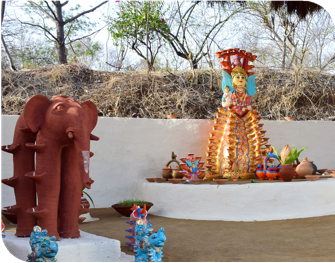
Fig. 10 Ayyanar Complex from Tamil Nadu Source/Copyright: Courtesy of Indira Gandhi Rashtriya Manav Sangrahalaya (IGRMS), Bhopal.
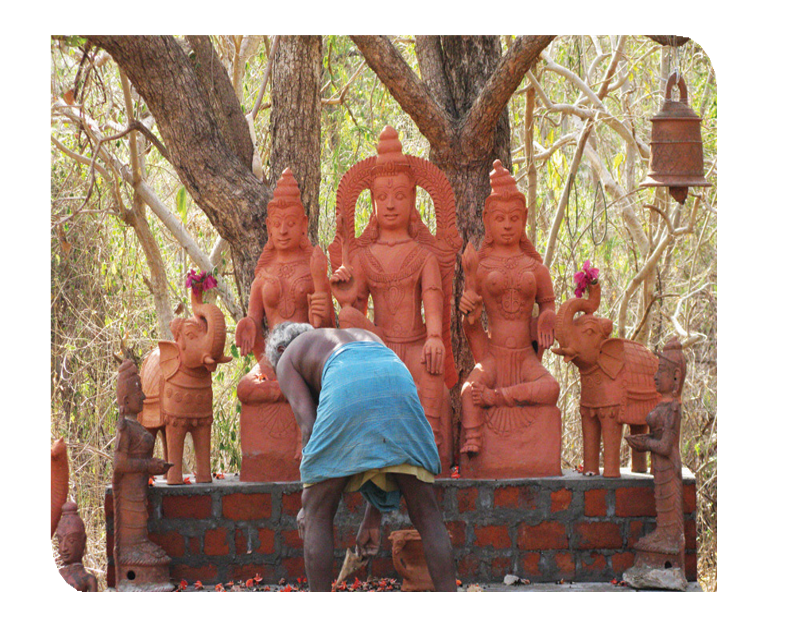
Fig. 11 Ayyanar Complex from Tamil Nadu Source/Copyright: Courtesy of Indira Gandhi Rashtriya Manav Sangrahalaya (IGRMS), Bhopal.
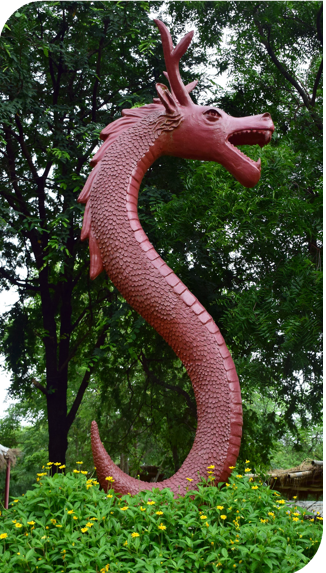
Fig. 12 Ayyanar terracotta horses installed at boundary space in the Mythological Trail, IGRMS. Source/Copyright: Courtesy of Indira Gandhi Rashtriya Manav Sangrahalaya (IGRMS), Bhopal.
Politics of Presence and Decolonial Museology
Museums are historically linked to colonial systems of knowledge, classifying cultures as objects of study rather than as coexistent worldviews. IGRMS subverts this epistemic hierarchy through what may be termed a politics of presence. Instead of curating objects, it curates relationships. Karp and Lavine (1992) emphasize that museums operate within the politics of public culture, where decisions about display, voice, and interpretation shape whose histories are legitimized. Message’s (2013) analysis demonstrates that museums are not merely sites of cultural display but can be instruments of political dialogue and change when curators engage with movements and marginalized voices. This perspective underscores the importance of tribal activism within museum contexts and supports approaches that center community agency over institutional authority. Tribal communities are invited as co-creators, performers, and narrators. The presence of ritual specialists, musicians, and artisans within the museum transforms it into a living laboratory of culture.
This approach resonates with decolonial museology, which seeks to redistribute authority and acknowledge indigenous epistemologies. The museum thus becomes a site of negotiation between state structures and community autonomy. For example, in the maintenance of Kutia Kandha and Santhal houses, community representatives periodically visit to perform rituals, repair structures, or renew offerings. These acts, though symbolic, sustain the object’s spiritual vitality.
However, this dialogic model introduces tensions. How does one maintain sacred authenticity within an institutional framework? Can ritual be both genuine and pedagogical? IGRMS negotiates these questions through ethical curatorship, ritual participation remains voluntary, and interpretation panels are co-written with communities. The museum thereby moves from representation to co-presence.
The Museum as Sacred Landscape
Walking through IGRMS is akin to traversing an ethnographic pilgrimage. From the prehistoric rock shelters, silent witnesses to early human creativity, to the luminous Al-Vilakku lamp of Kerala with its thousand wicks, every site resonates with sacred symbolism. The museum’s landscape embodies what anthropologist Tim Ingold (2000) calls a “dwelling perspective,” where human experience is inscribed in the environment rather than detached from it.
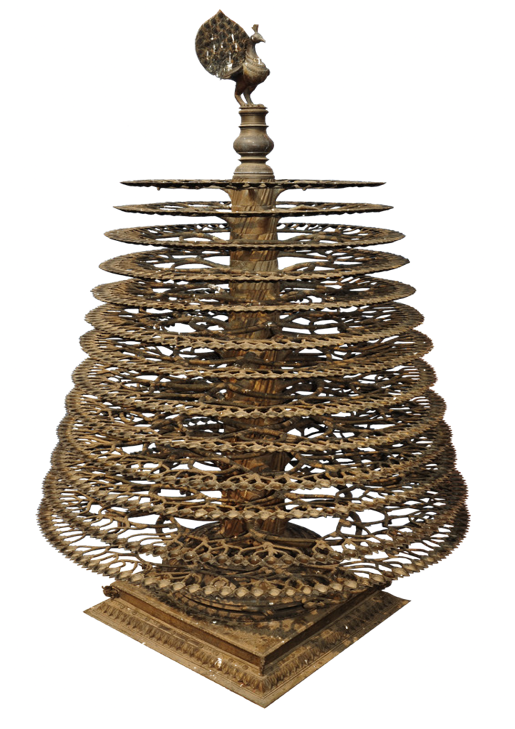
Fig. 13 Al-Vilakku lamp of Kerala. Source/Copyright: Courtesy of Indira Gandhi Rashtriya Manav Sangrahalaya (IGRMS), Bhopal.
Reflections and Challenges
Engaging with tribal religion in museum spaces demands sensitivity to both epistemic and ethical boundaries. The sacred is not an object to be interpreted but a relation to be respected. IGRMS achieves this balance by transforming the museum from a site of collection to a site of communion. Yet, challenges persist. Institutional regulations may limit spontaneous ritual activity; visitors may interpret living traditions through exotic or folklorized lenses. Sustaining community collaboration requires continuous dialogue, funding, and trust.
Nevertheless, the IGRMS experiment opens a path for museums worldwide seeking to reconcile preservation with presence. It asserts that indigenous spirituality cannot be archived, it must be encountered. The museum’s curatorial ethos rooted in respect, reciprocity, and reanimation embodies a vital lesson: to animate the sacred is to honor the living continuity of belief.
Conclusion
In reimagining the museum as a living sanctuary of plural worlds, IGRMS transforms museology into a form of cultural diplomacy between the human and the divine, the local and the national, tradition and modernity. By animating the sacred through participation and presence, it offers a model for decolonial heritage practice. The tribal religions represented at IGRMS are not frozen relics but breathing philosophies of coexistence. In their presence, the museum ceases to be a storehouse of the past; it becomes a space of becoming.
Acknowledgement: The factual content in this blog post is sourced from IGRMS, while the interpretations are solely those of the author. The author sincerely thanks Prof. Amitav Pandey, Director, Indira Gandhi Rashtriya Manav Sangrahalaya (IGRMS), for granting her permission to write about and discuss IGRMS. She also extends heartfelt thanks to Dr. Tapas Biswas and the entire IGRMS team for generously sharing data and providing the beautiful photographs.
References
Borthakur, Anwesha. 2013. “The case of sacred groves in India.” Economic & Political Weekly 48(41): 25–27.
Clifford, James. 1997. Routes: Travel and translation in the late twentieth century. Cambridge: Harvard University Press.
Elwin, Verrier. 1955. The religion of an Indian tribe. Oxford: Oxford University Press.
Indira Gandhi Rashtriya Manav Sangrahalaya. (n.d.). Official exhibition catalogues and institutional reports. https://igrms.org.in/exhibitions?tab=openair
Ingold, Tim. 2000. The perception of the environment: Essays on livelihood, dwelling and skill. London: Routledge.
Karp, Ivan, Christine Mullen Kreamer, and Steven D. Lavine, eds., 1992. Museums and communities: The politics of public culture. Smithsonian Institution Press.
Message, Kylie. 2013. Museums and social activism: Engaged protest. London: Routledge.
Sili Rout is a social anthropologist and Deputy Director at the Indian Council of Social Science Research (ICSSR), Ministry of Education, Government of India. With over twelve years of teaching and research experience, her work focuses on tribal cultures, indigenous knowledge systems, ritual food ways, and the anthropology of religion. She has conducted extensive ethnographic fieldwork among Particularly Vulnerable Tribal Groups (PVTGs) in Odisha and is actively engaged in heritage documentation and applied anthropology. Dr. Rout has also studied the curatorial practices of institutions like the Indira Gandhi Rashtriya Manav Sangrahalaya (IGRMS), exploring their role in preserving tribal spiritual expressions.