










































 | 04/08/26 |
An Anthropology of the Hydrosocial Anthropocene
Towards a Decolonial Perspective on Global Water Crises
Water is one of the key elements through which the Anthropocene is experienced. From droughts and floods to melting ice and polluted rivers, contemporary environmental crises are increasingly shaped by the intertwined and historically grown dynamics of ecology, politics and infrastructure. This blog post argues that understanding these crises requires a “hydrosocial” perspective that sees water not as a given natural resource but as something produced through social, cultural and political relations. It uses the concept of waterworlding to describe the ongoing and often contested processes through which waters, people and more-than-human relations co-produce particular worlds and ways of living.
Building on anthropological research, the post proposes a decolonial approach to the “hydrosocial Anthropocene”. It suggests that in the Anthropocene, many communities – especially Indigenous and other formerly colonised peoples – are not facing an existential environmental crisis for the first time, but are continuing long-standing struggles against the legacies of colonial dispossession and ecological disruption. Using examples from northern Namibia, the Sundarbans, the Colombian Río Atrato and the Circumpolar North, the post explores four key vectors of contemporary waterworlding: drying, flooding, thawing and polluting.
Rather than framing these processes solely as disasters that require resilience, Franz Krause highlights Indigenous and local practices of “survivance,” understood as forms of endurance, resistance and world-making that reconnect people, water, and more-than-human relations. The author argues that a decolonial anthropology of water offers not only a richer understanding of global water crises but also alternative ways of imagining and responding to the uncertain futures of the Anthropocene.
Introduction: A Hydrosocial Anthropocene
The Anthropocene has become a central figure for thinking about social and ecological life. At the same time as it was denied the status of a geological era, the Anthropocene became the label for a discursive shift across a wide range of academic fields. It denotes the extensive planetary impacts of human activities and popularises the insight that sociocultural and physical processes must not be analysed separately. Many of the processes associated with the Anthropocene are aquatic, from rising sea levels, melting permafrost and ice caps, and depleted aquifers to increased frequency of floods and droughts, higher density of large dams, and larger quantities of polluted waters. The Anthropocene, in other words, comes to matter practically through water regimes impacted by human activities, and through the ways these, in turn, affect human lives.
On the one hand, this happens through increased variability in temperatures, precipitation and evaporation (Ndehedehe 2023). On the other hand, a large amount of water that matters to people is channelled through large-scale and intricate infrastructures, which reflect economic priorities, cultural ideals, political frictions and temporal horizons (Obertreis et al. 2016). Therefore, access to water resources and exposure to water-related hazards are not only becoming more unpredictable and extreme with climate change but are also routed by infrastructural projects that create and reproduce social and material divisions and inequalities. In what can be called the “hydrosocial Anthropocene” (Krause 2018), water and related matter including fish, salt, sediment and pollution come into being through processes that are at once political and ecological, to the extent that it is impossible to distinguish one from the other (Morgan 2017). This approach to water requires close ethnographic attention to everyday water practices (e.g. Stensrud 2016) as it strives to avoid reducing water to its “modern” abstraction of a clear, circulating substance (Linton 2008) and instead probes into particular, situated productions of waters and crises.
My proposition builds on what various scholars have referred to as “waterworlds” (Dietzsch 2021; Hastrup and Hastrup 2016; Barnes and Alatout 2012). This concept emphasises how waters and their challenges become the many things that they so self-evidently seem to be in different settings through always particular, if frequently overlapping, relations and processes. At the same time, this framing illustrates that not only is water “what we make of it,” as Jamie Linton (2010) pointed out, but also that particular forms of water participate in configuring social worlds (Hastrup 2013; Linton and Budds 2014).
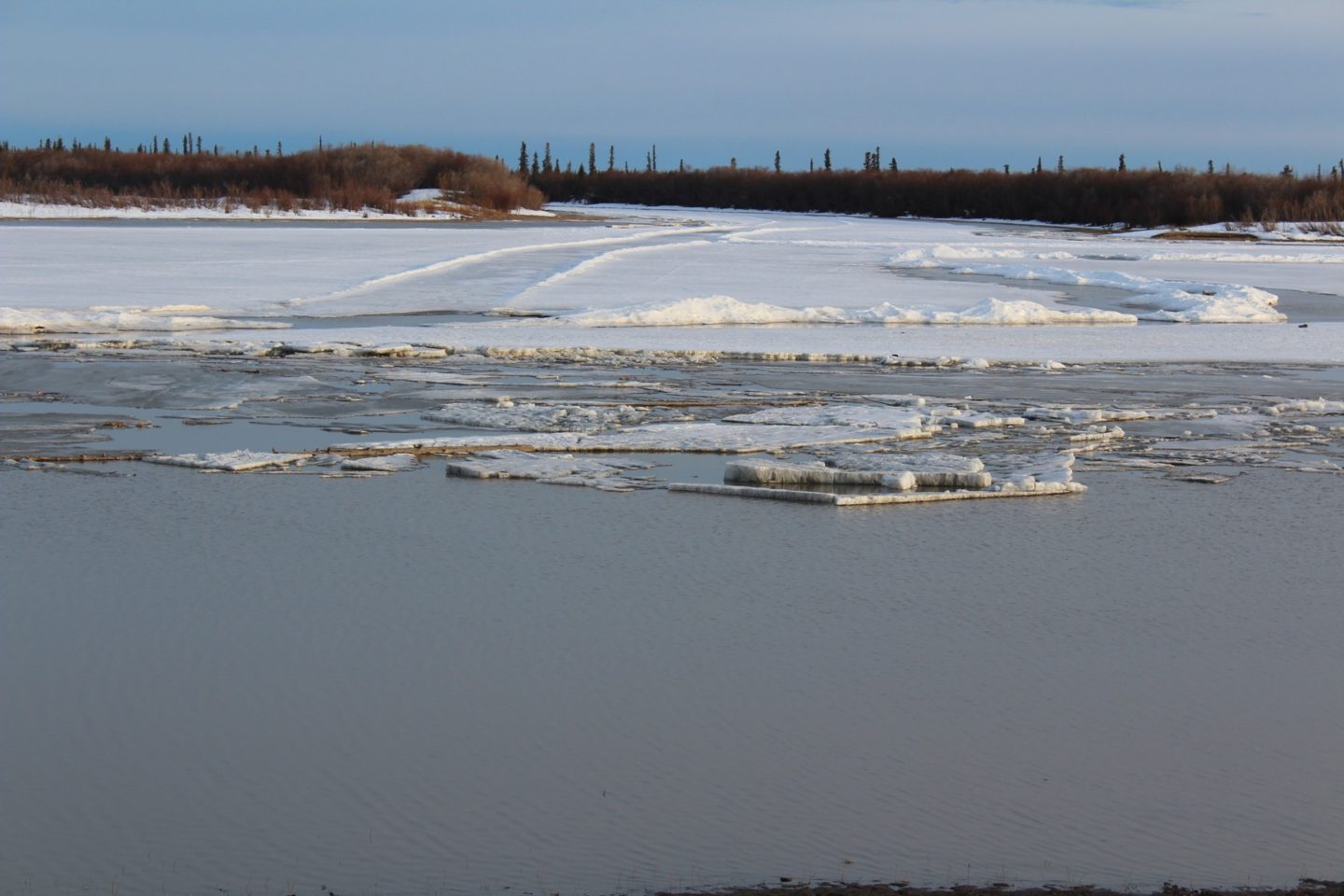
Kirsten Hastrup (2009) has suggested three “regions of disaster”. These territorialise the water crises of a changing climate not as geographic areas but as avenues for focusing on particular hydrosocial dimensions. They are “the drying lands” of growing deserts, “the rising seas” threatening coastal and island populations, and “the melting ice” of polar regions and glaciers. While these avenues for studying water in a changing climate remain meaningful for studying water in the Anthropocene, they must be complimented by a fourth “region of disaster” that figures prominently in discussions of water issues in this era: “the polluting flows” (e.g. Rockström et al. 2014) that spread and sediment contaminants on multiple scales, from mining leaks to plastics in the oceans. Hastrup’s waterworlds approach – complemented by a dimension focusing on pollution, and turned into a verb as “waterworlding” as suggested by the initiators of this blog series (Dietzsch 2026) – thus provides a stimulating framework for grappling with the hydrosocial Anthropocene.
Hydro-Colonialism
As numerous scholars and activists have pointed out, the Anthropocene is steeped in colonial relations (Davis and Todd 2017). Among these are hydrosocial phenomena. South African literary scholar Isabel Hofmeyr has coined the term “hydro-colonialism” (2019), locating the relation between coloniality and water in the oceans across which slaves were shipped. In what follows, I will take you down another avenue towards understanding and engaging with hydro-colonialism. This avenue explores current existential water crises that aim to de-centre Western mainstream understandings of the Anthropocene as a novel epoch of human-made crises.
Indeed, the current ecological, climatic, economic and societal upheavals are potentially catastrophic for the predominantly Western, white, and middle-class observers, who have enjoyed privileged positions for generations and have little experience with and only faint memories of crises, loss, chaos and catastrophe. However, for many if not most people around the world, the threats associated with the Anthropocene do not come as a radical crumbling of previous certainties and stability. Instead, they are yet another set of challenges to deal with, yet another set of impacts of global processes beyond their control for which there are no precedents and recipes (Whyte 2017a). This is especially true for Black and Indigenous people whose worlds have been upended by colonial processes including displacement, dispossession, death, and disruption of regional ecologies.
Here, I am following Potawatomi philosopher and environmental justice scholar-activist Kyle Whyte, who has argued that Indigenous people today are inhabiting their “ancestors’ dystopia” and have been engaging for decades in efforts to re-grow the more-than-human worlds that have been destroyed and continue to be threatened by settler colonialism and its contemporary manifestations (Whyte 2017b). While the white middle classes of the Global North are currently sensing the end of their waterworld-as-they-know-it, the descendants of colonised subjects are not facing the end of any comfortable and stable privileges. Rather, they are continuing the generations-old struggle to re-build and re-grow the worlds that have been, and continue to be, undone through colonial and postcolonial violence. Whyte illustrates this with examples of ongoing Anishinaabe practices of conservation and restoration, which include – alongside mné (lake sturgeon) and manoomin (wild rice) – also nibi (water).
Water is an element firmly interwoven in Anishinaabe webs of relationships and has its own role and responsibility comparable to those of humans and other living beings. As such, water deserves respect and gratitude, which North American settler practices have denied it for centuries. The Great Lakes, homeland to the Anishinaabe people, have become the sink for agricultural runoff, sewage and industrial pollution, all of which keep affecting Anishinaabe and other inhabitants of the region. Foreshadowing other manifestations of water protectors – such as those associated with the famous protests against the Dakota Access Pipeline at the Standing Rock reservation (Estes 2019) – Anishinaabe women have set out to help re-establish healthy relationships with the waters of the Great Lakes region. They emphasise that water must not be reduced to a material object at the disposal of capitalist accumulation. For example, a group of Anishinaabe women embarked on a walk around the Great Lakes in the early 2000s. What they called the “Mother Earth Water Walk” has since spread across North America and attracted increasing numbers of people, including non-Anishinaabe participants. Importantly, for Whyte’s (2017b) argument, these walks and other practices are not attempts to avoid an impending water crisis; rather, they are environmental restoration efforts that aim to re-grow relationships that have been ruptured repeatedly in the colonial past and present.
Whyte’s intervention shows that in order to better understand and more appropriately respond to current water crises, there is a need for “de-colonizing the Anthropocene” (Davis and Todd 2017). A decolonial approach to the Anthropocene must begin by acknowledging the histories of dispossession, racism and manufactured dependencies that structure current struggles with planetary crises (Whyte 2018). It would explore experiences of water transformations as hydrosocial trajectories, where these histories are entangled with the respective hydrological dynamics. Thereby, it would seek to understand water dynamics through their simultaneous enrolment in – and spillover from – the modular simplifications and feral proliferations that Anna Tsing and her colleagues (2019) have identified around colonial and capitalist projects.
Ethnographic fieldwork plays a critical role in studying the frictions between, on the one hand, people’s spirited maintenance of agency throughout crises and, on the other hand, the continual reproduction of these crises on multiple scales. Exploring these frictions may also give insight into altogether different framings of Anthropocenic challenges, which can suggest alternative pathways of confronting them. In this context, I see high potential in the concept of “survivance,” coined by Chippewa scholar and writer Gerald Vizenor (1999, 2008). “Survivance” – which can be understood as a neologism including survival, resistance and endurance – indexes Indigenous agency, resistance and resurgence as a counterpoint to the prevailing narratives of Indigenous people as moribund victims of industrial modernity. It asserts that Indigenous people, narratives and practices are not just barely surviving in the ruins of their pre-contact glory, as museal remnants of a bygone era, but are continuing and thriving through their own agency in telling and refashioning their own stories and destinies.
I believe that survivance can serve as a powerful decolonial counterpoint to a framing in terms of “resilience” (e.g. Berkes and Ross 2013), a concept that has become very popular in theorising complex adaptive systems using tools from ecology and psychology. It is clear, however, that resilience re-introduces very problematic ideas about adaptation and equilibrium, supports neoliberalisation through its blindness towards political economy (Watts 2015) and assigns responsibility for suffering to those who suffer, emptying all options for structural change (Evans and Reid 2013). Furthermore, the theoretical and practical use of resilience is generally a technical matter, devoid of the politics that produce vulnerabilities and are necessary to transform them (Barrios 2016). By contrast, studying vectors of the hydrosocial Anthropocene through a survivance lens has the potential to identify perspectives and strategies that link environmental and social justice. This approach is helpful for understanding current ecological issues and conflicts in the light of their colonial histories and decolonial potentials (Dhillon 2018).
Four Waterworlding Vectors of the Hydrosocial Anthropocene
In order to clarify what I mean by this proposition for a decolonial approach to global water crises, I will briefly sketch four examples, each corresponding to one vector of waterworlding in the hydrosocial Anthropocene as outlined above. While Hastrup (2009) approached the watery manifestations of climate change as “regions of disaster”, I find it more productive to understand them as vectors in a dynamic world, where they feed into processes of waterworlding that also include people’s worldmaking practices (Crate and Nuttall 2024).
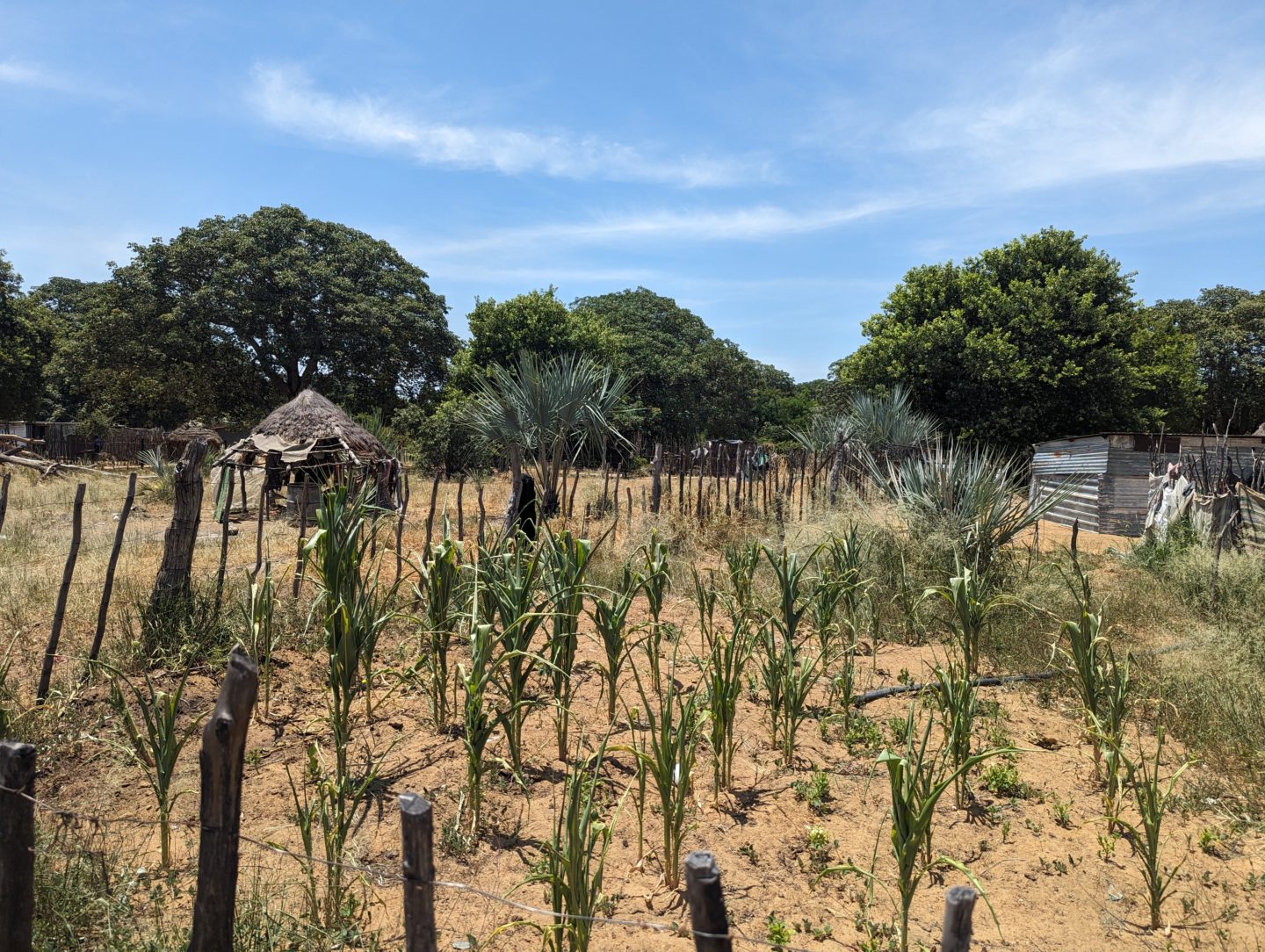
Drying landscapes belong to the doomsday scenarios of Western iconography and have occupied anthropologists and their colleagues in related disciplines for a long time (Derman 1978). More recent research has elaborated how drought is not only a meteorological event, but simultaneously manufactured discursively (Mehta 2005) and infrastructurally (Carse 2017), and that the lack of water affects not only livelihoods but much wider sociocultural processes (Muehlmann 2013). Despite this legacy, current research on dry and drying landscapes habitually relies on problematic assumptions that fail to understand dryness as anything but catastrophic (Krätli et al. 2015). If we investigated, for example, the hydrosociality of drought in Northern Namibia, we would find that water and its absence have historically been pertinent issues (Van Wolputte 2006), and that climate scenarios predict the crossing of critical thresholds for the near future (Bollig 2020), all of which casts the area’s inhabitants as victims. After colonial dispossession and an Apartheid regime under South African rule, Namibia has been experimenting with devolving water and land management, with the inhabitants of the peripheral North not always benefiting. A decolonial approach to water crises could build on anthropological investigations of the interplay of different kinds of institutional arrangements in water access and drought management (Piemontese et al. 2024) and focus on the implications of colonial legacies for farmers and pastoralists dealing with today’s droughts (Menestrey Schwieger and Mbidzo 2020) as well as the politics in negotiating viable futures.
The hydrosociality of flooding, eroding and drowning landscapes characterises life along many coasts around the world as sea levels rise, storms intensify, modern infrastructures age and land and water use alter sediment flows or cause land subsidence. In Western popular perception and international development imaginaries, these regions have become what Jason Cons calls “heterodystopias” (2018): places of inevitable, catastrophic changes which reduce the agency of their inhabitants to coping or migrating. These catastrophic imaginaries may be taken up by coastal inhabitants (Harms 2018), conflicting with longer traditions of survivance in an unstable, amphibious environment (Lahiri-Dutt and Samanta 2004). Ethnographies from the Sundarbans region, which straddles the India-Bangladesh border in South Asia and where many Bengali people find themselves squeezed between climate change, conservation restrictions and industrial development (Cons 2025), can provide insights into everyday experiences of what Upasona Ghosh and colleagues call “living on the edge” (2018) at the intersection of sea level rise, land subsidence, salinisation, postcolonial partition, development aspirations, biodiversity conservation and a highly problematic legacy of colonial water management infrastructure (Dewan 2021). Life in the Sundarbans can thereby provide a productive vantage point for what Calynn Dowler calls “provincializing the Anthropocene” (Dowler 2020).
The main hydrosocial matter of concern for the Circumpolar North today is the thawing of ice and permafrost – at least in the imagination of the inhabitants of more southern regions. Through a process known as arctic amplification, temperatures in the High North have risen nearly four times as much as the global average, leading, among other things, to the dramatic shrinkage of Arctic sea ice. This vector of water in the Anthropocene has occupied anthropologists and geographers who work with Arctic and Sub-Arctic people for more than two decades. Research has explored the implications of melting sea ice for Inuit communities (Tejsner 2013), knowledge and practices related to permafrost thaw (Crate et al. 2017) and the political implications of an increasingly ice-free Arctic (Bravo and Rees 2006).
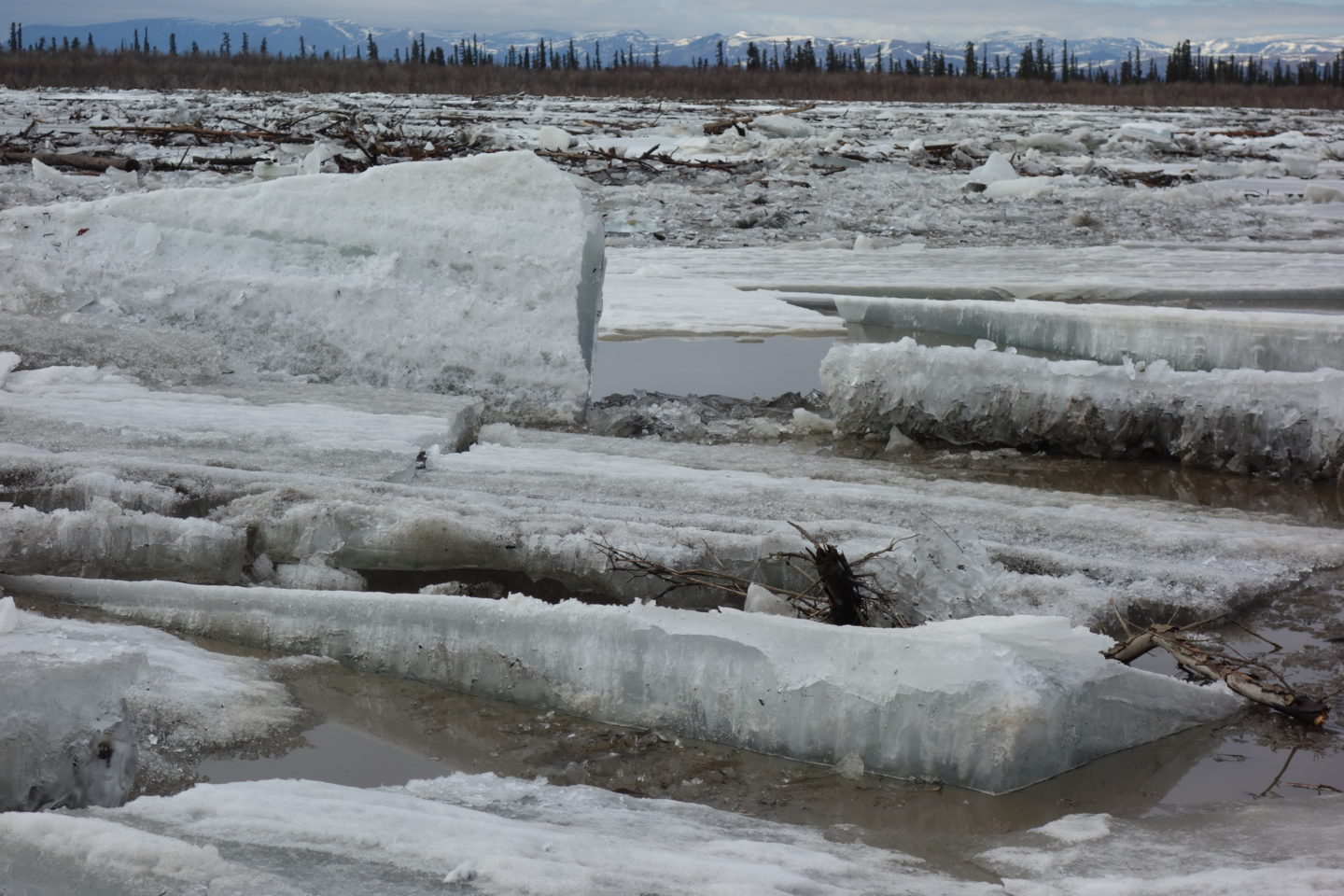
At the same time, anthropological and related research has identified a longer tradition of narratives about the Circumpolar North as a region determined by its climatic eccentricities with a human population at the brink of extinction due to the harsh and limiting conditions. The current worries about eroding coasts, shrinking ice and thawing ground, widespread among critical commentators in Europe and North America, sometimes seem to dovetail a little too easily with the accounts of early explorers and later colonial administrators who saw life in the far North as suspended in perpetual crisis caused by an unforgiving climate, with dire need for material and intellectual support from the South. Today, not only does the mostly natural-science-driven research on the melting “cryosphere” (Ruiz et al. 2020) retain a colonial framing of Arctic inhabitants – as lacking the knowledge and models to deal with their transforming environments – but the very research practice continues to channel opportunities, resources and explanatory power to southern institutions at the expense of the North. Moreover, by framing the core challenges as related to climate change, this research sidelines other challenges, worries and opportunities, and suggests that current crises have a meteorological origin – even if ever so human-induced – which implies a technical set of solutions.
It is often through water, its flows and infrastructures, that pollution spreads, settles and comes to matter in the hydrosocial Anthropocene. This is the case for plastics (Pathak and Nichter 2019) or when hydrocarbon extraction (de Rijke et al. 2016) compromises water for drinking and irrigation. Pollution is also distributed and accumulates in relation to the hydrosocial cycle, such as mining waste amassing in downstream wetland fisheries (Camargo 2021), or urban sewage and industrial effluents flooding into informal coastal neighbourhoods (Ley 2021). Water pollution disproportionally affects people among ethnic lines (Hoover 2017) and also reproduces other inequalities. While physical and ritual pollution are not necessarily congruent (Alley 2002), both are experienced as disruptions of correct flows and relations (Krause and Strang 2013). Recent work with the Afro-Colombian and Indigenous inhabitants of the Río Atrato basin in Colombia has illustrated how these people are confronting severe mining-induced pollution (Tubb 2020) but have recently garnered hope with the Constitutional Court of Colombia conferring personal rights to the Río Atrato (Riaño-Alcalá and Toro 2020). Indigenous and Afro-Colombian groups – the latter of whom were only recognised as an ethnic minority in the 1990s (Oslender 2016) – are in the process of re-building their lifeworlds that had been destroyed during colonialism, while facing continuing and novel challenges.
The Circumpolar North
After these brief glimpses into Northern Namibia, the Sundarbans, the Río Atrato and the Circumpolar North, I would now like to take you on a slightly more detailed foray to the latter region, which has become one of the key fields for thinking and worrying about the Anthropocene. Not only have studies of pollution demonstrated that the poisons excreted from industrial metabolisms around the world reach even these seemingly far-away places, often through water. Persistent organic pollutants, for example, which are discharged into the ocean are taken up by phytoplankton and accumulate in ever-higher concentrations along the food chain, have been found in Arctic fauna at alarming levels. The Arctic has also become vulnerable to large-scale devastation due to many large-scale resource extraction projects, as the 1989 Exxon Valdez oil spill – the largest of its kind until the Deepwater Horizon disaster in the Gulf of Mexico in 2010 – painfully made clear. Neither then nor now has the grandeur of oil extraction and transport been matched by an even remotely similar capacity for accident response, which meant that efforts to contain and clean the Exxon Valdez spill were much delayed, lasted for many weeks, and were never completed. Even today, more than thirty-five years after the event, oil can be found not far from the surface on the beaches and islands of Prince William Sound, and while some plant and animal communities have recovered in the last decades, others have not. This also goes for the human communities in the area.
In order to illustrate the sense of devastation of the oil spill, as well as the remarkable sense of survivance among Alaska Natives, let me quote Walter Meganack Sr., the late chief of Port Morgan, Alaska, who characterised the catastrophe as “The Day the Water Died” (quoted in Gill and Picou 2001):
The excitement of the season had just begun, and then we heard the news, oil in the water, lots of oil killing lots of water. It is too shocking to understand. Never in the millennium of our tradition have we thought it possible for the water to die, but it’s true. […]
We have never lived through this kind of death, but we have lived through lots of other kinds of death. We will learn from the past, we will learn from each other, and we will live. The water is dead, but we are alive, and where there is life there is hope.
The phenomenal achievements that many Indigenous groups – for instance in the American far North – have made in recent decades in terms of land claims and self-government arrangements provide valuable tools for devising a different approach to the hydrosocial Anthropocene. But formal research permits and data-sharing agreements alone will not shift perspectives and methods. Rather, we must be open to rather different sets of relations that shape pressing problems and possible ways forwards beyond the “rendering technical,” in Tania Li’s (2007) words, of climate change, adaptation and resilience, and we must also allow for the possibility that water matters in other forms than the ones we identify as being in crisis from our European and North American vantage points (Krause 2023).
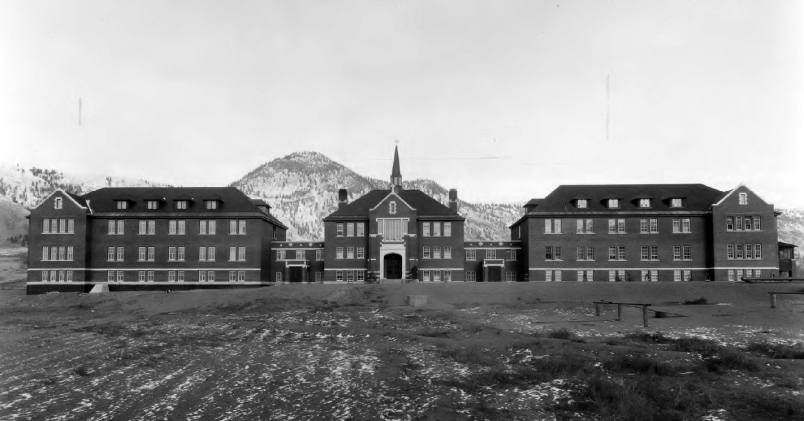
For example, when evidence for the secret burial of around two hundred Indigenous children was found in the yard of the residential school in Kamloops, BC in 2021, some aspects of these different relations received a brief flash of international journalistic attention. The residential school system, devised by the Canadian settler state with the explicit goal of assimilating Indigenous people into a dominant and ostensibly inevitably European-derived mainstream, and operational mostly from the late 19th to the mid-20th century, lies at the heart of many current challenges of Indigenous groups. After many generations of children had been prohibited from speaking their parents’ languages, practice their rituals and acquire their skills, after they had been abused physically and mentally for years on end, and had been told that their elders’ ways were outdated and superstitious, it takes tremendous efforts not only to re-learn these ways, but also to re-grow the relations with lands, waters and other living beings that had been cut in the process. The point here is that the main questions concerning a disquieting and uncertain ground entertained by Northern Canadian Indigenous people may not only be about thawing permafrost, but also about the connections of industrially-induced global warming with older forms of violence and intrusions that may emerge from the ground, such as the residential schools and the unsettling reproduction of their patterns today.
Furthermore, the temporality of thawing also manifests differently in the Indigenous North than in mainstream climate-change discourse (Nuttall 2026). Not only do references to the past – from residential school heritage to more reliable ice conditions and elders’ knowledges – take precedence over references to future scenarios. The very linearity of the process also seems less relevant than the annual fluctuations, seasonal and otherwise, of a volatile cryosphere. Water matters less as a general substance than as a specific kind of material: as a frozen solid, in the uncertain states of melting and thawing, and as open, fluid water (Krause 2026). When we discuss water, we must therefore be careful not to equate it with the particular fluid that we are confronted with in the temperate climate where we live, or in the urban contexts where we work. Water, as it matters to people around the world and participates in their social, cultural, economic and artistic universe, comes in many different kinds and forms. Some have pointed to a general blindness among Euro-American researchers for “brown” water (in the soil) or “green” water (in biomass) (Linton 2008). Others have outlined the crucial differences in salt and fresh water, or in flowing and stagnant water; and in the Arctic, it is the state of water – solid, liquid, or in between – that often matters most.
Not only does water come in a variety of forms that may not register on our own list of hydrological priorities. It is also always embedded in specific sets of relationships that may make water, water concerns and water care into strikingly different things than the global, modern water that has come to dominate mainstream Western imagination. In the Circumpolar North, water issues emerge in the historical context of colonial domination and decolonial struggles, where fragile ice roads, eroding camp sites and questionable drinking water come to matter in relation to uncertain boom-and-bust economies, residential school trauma and continuing dependencies.
Conclusion: Ways of Waterworlding
In this blog post, I have proposed framing the Anthropocene as a set of hydrosocial processes with unfolding or impending water crises characterised by drying, flooding, thawing and polluting. More than regions of disaster, these are vectors of a hydrosocial Anthropocene that people around the world integrate in various ways into their multiple waterworlding practices. For many postcolonial subjects, these processes register as aspects of their “ancestors’ dystopia” where hydrosocial worlds have already been upended and current projects focus on restoring relations rather than averting the collapse of previously stable worlds. I have shared some insights from the Circumpolar North, and I have suggested paying attention to the politics of survivance in the face of contemporary water crises, a politics in which we as researchers are implicated, too. What I hope to illustrate is that for understanding and responding to water-related challenges, we must not only understand what water is – and can be – in particular contexts, but we must also remain attentive to the colonial continuities and decolonial endeavours that make the hydrosocial Anthropocene more than a current emergency. If we understand the deeply rooted struggles with the Anthropocene as a process of “waterworlding” – a set of ongoing, uncertain and often conflictual worldmaking practices and processes –, we may be better equipped to see and support the powerful manifestations of survivance at the heart of current struggles with multiple water crises.
References
Alley, Kelly D. 2002. On the Banks of the Gaṅgā: When Wastewater Meets a Sacred River. University of Michigan Press.
Barnes, Jessica, and Samer Alatout. 2012. “Water Worlds: Introduction to the Special Issue of Social Studies of Science.” Social Studies of Science 42 (4): 483–88.
Barrios, Roberto E. 2016. “Resilience: A Commentary from the Vantage Point of Anthropology: Resilience: A Commentary from the Vantage Point of Anthropology.” Annals of Anthropological Practice 40 (1): 28–38. https://doi.org/10.1111/napa.12085.
Berkes, Fikret, and Helen Ross. 2013. “Community Resilience: Toward an Integrated Approach.” Society & Natural Resources 26 (1): 5–20. https://doi.org/10.1080/08941920.2012.736605.
Bollig, Michael. 2020. Shaping the African Savannah: From Capitalist Frontier to Arid Eden in Namibia. Cambridge University Press.
Bravo, Michael, and Gareth Rees. 2006. “Cryo-Politics: Environmental Security and the Future of Arctic Navigation.” The Brown Journal of World Affairs 13 (1): 205–15.
Camargo, Alejandro. 2021. “Stagnation: Waterflows and the Politics of Stranded Matter in La Mojana, Colombia.” In Delta Life: Exploring Dynamic Environments Where Rivers Meet the Sea, edited by Franz Krause and Mark Harris. Berghahn.
Carse, Ashley. 2017. “An Infrastructural Event: Making Sense of Panama’s Drought.” Water Alternatives 10 (3).
Cons, Jason. 2018. “Staging Climate Security: Resilience and Heterodystopia in the Bangladesh Borderlands.” Cultural Anthropology 33 (2): 266–94.
Cons, Jason. 2025. Delta Futures: Time, Territory, and Capture on a Climate Frontier. University of California Press.
Crate, Susan A., and Mark Nuttall, eds. 2024. Anthropology and Climate Change: From Transformations to Worldmaking. Third edition. Routledge.
Crate, Susan A., Mathias Ulrich, J. Otto Habeck, et al. 2017. “Permafrost Livelihoods: A Transdisciplinary Review and Analysis of Thermokarst-Based Systems of Indigenous Land Use.” Anthropocene 18 (June): 89–104. https://doi.org/10.1016/j.ancene.2017.06.001.
Davis, Heather, and Zoe Todd. 2017. “On the Importance of a Date, or, Decolonizing the Anthropocene.” ACME: An International Journal for Critical Geographies 16 (4): 761–80.
Derman, Bill. 1978. “Pastoralism, the Sahelian Drought and Famine: Anthropology and Response to a Crisis.” Reviews in Anthropology 5 (1): 89–99.
Dewan, Camelia. 2021. Misreading the Bengal Delta: Climate Change, Development, and Livelihoods in Coastal Bangladesh. University of Washington Press.
Dhillon, Jaskiran. 2018. “Introduction: Indigenous Resurgence, Decolonization, and Movements for Environmental Justice.” Environment and Society 9 (1): 1–5. https://doi.org/10.3167/ares.2018.090101.
Dietzsch, Ina. 2021. “Waterworlds Revisited.” Hamburger Journal Für Kulturanthropologie 13: 79–95.
Dietzsch, Ina. 2026. “Worlding waters: Some thoughts on this blog as a site of waterworlding.” boasblogs, July 24. https://boasblogs.org/waterworlding/worlding-waters/.
Dowler, Calynn. 2020. “Water and Human-Nonhuman Agency in India’s Sundarbans.” IIAS Newsletter 85: 43.
Estes, Nick. 2019. Our History Is the Future: Standing Rock Versus the Dakota Access Pipeline, and the Long Tradition of Indigenous Resistance. Verso.
Evans, Brad, and Julian Reid. 2013. “Dangerously Exposed: The Life and Death of the Resilient Subject.” Resilience 1 (2): 83–98. https://doi.org/10.1080/21693293.2013.770703.
Ghosh, Upasona, Shibaji Bose, and Rittika Bramhachari. 2018. “Living on the Edge: Climate Change and Uncertainty in the Indian Sundarbans.” STEPS Working Paper 101. https://steps-centre.org/publication/living-edge-climate-change-uncertainty-indian-sundarbans/.
Gill, Duane A., and J. Steven Picou. 2001. “The Day the Water Died: The Exxon Valdez Disaster and Indigenous Culture.” In American Disasters, edited by Steven Biel. New York University Press.
Harms, Arne. 2018. “Filming Sea‐level Rise: Media Encounters and Memory Work in the Indian Sundarbans.” Journal of the Royal Anthropological Institute 24 (3): 475–92.
Hastrup, Kirsten. 2009. “Waterworlds: Framing the Question of Resilience.” In The Question of Resilience: Social Responses to Climate Change, edited by Kirsten Hastrup. Det Kongelige Danske Videnskabernes Selskab.
Hastrup, Kirsten. 2013. “Water and the Configuration of Social Worlds: An Anthropological Perspective.” Journal of Water Resource and Protection 05 (04): 59–66. https://doi.org/10.4236/jwarp.2013.54A009.
Hastrup, Kirsten, and Frida Hastrup, eds. 2016. Waterworlds: Anthropology in Fluid Environments. Berghahn.
Hofmeyr, Isabel. 2019. “Provisional Notes on Hydrocolonialism.” English Language Notes 57 (1): 11–20.
Hoover, Elizabeth. 2017. The River Is in Us: Fighting Toxics in a Mohawk Community. University of Minnesota Press.
Krätli, Saverio, Brigitte Kaufmann, Hassan Roba, et al. 2015. “A House Full of Trap Doors: Identifying Barriers to Resilient Drylands in the Toolbox of Pastoral Development.” IIED Discussion Paper. https://pubs.iied.org/10112iied.
Krause, Franz, ed. 2018. Delta Methods. Reflections on Researching Hydrosocial Lifeworlds. Vol. 7. Cologne Working Papers in Cultural and Social Anthropology. Department of Cultural and Social Anthropology, University of Cologne.
Krause, Franz. 2023. “Climate Change as Colonial Echo in the Canadian Arctic.” In Anthropology and Climate Change: From Transformations to Worldmaking, 3rd edn, edited by Susan A. Crate and Mark Nuttall. Routledge. https://doi.org/10.4324/9781003242499-14.
Krause, Franz. 2026. “Unsettling Ice: Building Roads and Betting on Break-Up in the Mackenzie Delta.” In Water, Scale and Materiality: Anthropological Perspectives on Hydrosocial Relations, edited by Veronica Strang and Franz Krause. Berghahn.
Krause, Franz, and Veronica Strang. 2013. “Introduction to Special Issue: ‘Living Water’.” Worldviews: Global Religions, Culture, and Ecology 17 (2): 95–102.
Lahiri-Dutt, Kuntala, and Gopa Samanta. 2004. “Fleeting Land, Fleeting People: Bangladeshi Women in a Charland Environment in Lower Bengal, India.” Asian and Pacific Migration Journal 13 (4): 475–95. https://doi.org/10.1177/011719680401300404.
Ley, Lukas. 2021. Building on Borrowed Time: Rising Waters and Infrastructural Breakdown in the Delta of Semarang. University of Minnesota Press.
Li, Tania. 2007. The Will to Improve: Governmentality, Development, and the Practice of Politics. Duke University Press.
Linton, Jamie. 2008. “Is the Hydrologic Cycle Sustainable? A Historical–Geographical Critique of a Modern Concept.” Annals of the Association of American Geographers 98 (3): 630–49. https://doi.org/10.1080/00045600802046619.
Linton, Jamie. 2010. What Is Water? The History of a Modern Abstraction. UBC Press.
Linton, Jamie, and Jessica Budds. 2014. “The Hydrosocial Cycle: Defining and Mobilizing a Relational-Dialectical Approach to Water.” Geoforum 57 (November): 170–80. https://doi.org/10.1016/j.geoforum.2013.10.008.
Mehta, Lyla. 2005. The Politics and Poetics of Water: The Naturalisation of Scarcity in Western India. Orient Longman.
Menestrey Schwieger, Diego A., and Meed Mbidzo. 2020. “Socio-Historical and Structural Factors Linked to Land Degradation and Desertification in Namibia’s Former Herero ‘Homelands’.” Journal of Arid Environments 178: 104151.
Morgan, Ruth. 2017. “The Anthropocene as Hydro-Social Cycle: Histories of Water and Technology for the Age of Humans.” Icon 23: 36–54.
Muehlmann, Shaylih. 2013. Where the River Ends: Contested Indigeneity in the Mexican Colorado Delta. Duke University Press.
Ndehedehe, Christopher. 2023. Hydro-Climatic Extremes in the Anthropocene. Springer. https://doi.org/10.1007/978-3-031-37727-3.
Nuttall, Mark. 2026. “Beyond Melting Ice: Decolonising Environmental Governance in the Arctic.” In Decolonizing the Sustainable Development Goals, edited by Reetta Toivanen, Vladislava Vladimirova, and Carl-Gösta Ojala. Springer. https://doi.org/10.1007/978-3-032-14263-4_3.
Obertreis, Julia, Timothy Moss, Peter Mollinga, and Christine Bichsel. 2016. “Water, Infrastructure and Political Rule: Introduction to the Special Issue.” Water Alternatives 9 (2): 168–81.
Oslender, Ulrich. 2016. The Geographies of Social Movements: Afro-Colombian Mobilization and the Aquatic Space. Duke University Press.
Pathak, Gauri, and Mark Nichter. 2019. “The Anthropology of Plastics: An Agenda for Local Studies of a Global Matter of Concern.” Medical Anthropology Quarterly 33 (3): 307–26.
Piemontese, Luigi, Stefano Terzi, Giuliano Di Baldassarre, Diego A. Menestrey Schwieger, Giulio Castelli, and Elena Bresci. 2024. “Over-Reliance on Water Infrastructure Can Hinder Climate Resilience in Pastoral Drylands.” Nature Climate Change 14 (3): 267–74. https://doi.org/10.1038/s41558-024-01929-z.
Riaño-Alcalá, Pilar, and Natalia Quiceno Toro. 2020. “Presencias, sensibilidades y políticas cotidianas del habitar en el Atrato.” Revista Colombiana de Antropología 56 (2): 2. https://doi.org/10.22380/2539472X.1212.
Rijke, Kim de, Paul Munro, and Maria de Lourdes Melo Zurita. 2016. “The Great Artesian Basin: A Contested Resource Environment of Subterranean Water and Coal Seam Gas in Australia.” Society & Natural Resources 29 (6): 696–710. https://doi.org/10.1080/08941920.2015.1122133.
Rockström, J., M. Falkenmark, T. Allan, et al. 2014. “The Unfolding Water Drama in the Anthropocene: Towards a Resilience-Based Perspective on Water for Global Sustainability.” Ecohydrology 7 (5): 1249–61. https://doi.org/10.1002/eco.1562.
Ruiz, Rafico, Paula Schönach, and Rob Shields, eds. 2020. “Beyond Melt. Indigenous Lifeways in a Fading Cryosphere.” Special Issue in the Journal of Northern Studies 13(2).
Stensrud, Astrid B. 2016. “Climate Change, Water Practices and Relational Worlds in the Andes.” Ethnos 81 (1): 75–98. https://doi.org/10.1080/00141844.2014.929597.
Tejsner, Pelle. 2013. “Living with Uncertainties: Qeqertarsuarmiut Perceptions of Changing Sea Ice.” Polar Geography 36 (1–2): 47–64.
Tsing, Anna Lowenhaupt, Andrew S. Mathews, and Nils Bubandt. 2019. “Patchy Anthropocene: Landscape Structure, Multispecies History, and the Retooling of Anthropology: An Introduction to Supplement 20.” Current Anthropology 60 (S20): S186–97.
Tubb, Daniel. 2020. Shifting Livelihoods: Gold Mining and Subsistence in the Chocó, Colombia. University of Washington Press.
Van Wolputte, Steven. 2006. “The Political Ecology of Water in Northwest Namibia, 1915-1980.” Bulletin Des Séances= Mededelingen Der Zittingen 52 (4): 459–77.
Vizenor, Gerald. 1999. Manifest Manners: Narratives on Postindian Survivance. University of Nebraska Press.
Vizenor, Gerald, ed. 2008. Survivance: Narratives of Native Presence. University of Nebraska Press.
Watts, Michael. 2015. “The Origins of Political Ecology and the Rebirth of Adaptation as a Form of Thought.” In The Routledge Handbook of Political Ecology, edited by Tom Perreault, Gavin Bridge, and James McCarthy. Routledge.
Whyte, Kyle. 2017a. “Indigenous Climate Change Studies: Indigenizing Futures, Decolonizing the Anthropocene.” English Language Notes 55 (1): 153–62.
Whyte, Kyle. 2017b. “Our Ancestors’ Dystopia Now: Indigenous Conservation and the Anthropocene.” In The Routledge Companion to the Environmental Humanities, edited by Ursula Heise, Michelle Niemann, and Jon Christensen. Routledge.
Whyte, Kyle. 2018. “Settler Colonialism, Ecology, and Environmental Injustice.” Environment and Society 9 (1): 125–44. https://doi.org/10.3167/ares.2018.090109.
Franz Krause is a Professor of Environmental Anthropology and Co-Director of the MESH (Multidisciplinary Environmental Studies in the Humanities) hub at the University of Cologne (Germany) with a research focus on the role of water in society and culture. Franz has been working with Dinjii Zhuh and Inuvialuit in the Canadian Mackenzie Delta since 2015. Previously, he conducted research in Finland, England and Estonia. He is the author of Thinking like a River (2023), co-author of Environmental Anthropology (2023) and co-editor of Amphibious Anthropologies (2025) and Water, Scale and Materiality (2026).