














































 | 21/07/26 |
Navigating Divergences in Academic-Practitioner Collaboration
Insights from Research on Human Trafficking in Cameroon
Abstract
A central challenge in research collaboration lies in addressing power imbalances among stakeholders, whereby the most influential actors often shape research outcomes. In response, critics advocate for inclusive collaboration that amplifies the voices of those typically marginalized, namely, the research participants and historically marginalized groups such as women and other minorities. This article explores the practical and interpretive challenges encountered while working alongside key research participants in a 2024 workshop on Human Trafficking in Cameroon that culminated in a jointly authored policy brief. The analysis maps the diverse actors involved. These include practitioners (legal professionals from Cameroon’s Ministry of Justice, officials from other state ministries, representatives of local NGOs, and staff from foreign embassies and international organizations) and academic researchers from the University of Cologne (Ngeh and Pelican). It also reflects on key deliberations and unresolved interpretive divergences between academics and practitioners. The focus here is on how profound disagreements were navigated and negotiated and how trade-offs were made where possible to bridge differing perspectives. A key argument in the paper is that unresolvable differences between collaboration partners should be acknowledged as possible limits to the co-production of knowledge in certain contexts, allowing each partner to maintain their position. In the context of our research, this allowed the academic partners to uphold scientific rigour while the practitioners safeguarded practical applicability and contextual relevance.
Introduction
A research process that directly involves more than one person or includes the active engagement with the works of different people is inherently collaborative (Walsh 2007; Katz and Martin 1997). However, collaboration alone does not guarantee inclusivity due to inherent power asymmetries between partners. This limitation has prompted the development of new methodological approaches which are not only collaborative but also strive for symmetry by explicitly questioning and negotiating research hierarchies. They include participatory research (Chambers 1994), community-based research (Lepore et al. 2020), and dialogical approaches (Huynh et al. 2026; Martin and Dandekar 2022), among others.
As the literature indicates, the collaboration of different stakeholders in the research process is characterized by power asymmetry that allows the more influential and well-resourced actors to shape the research agenda or output (Fricker 2007; Pelican and Ngeh 2025; Pratt and Vries 2023). Thus, collaboration can become exploitative or exclusionary when it primarily serves the interests of the more influential research partners. In response, critics advocate for inclusive approaches that foreground equity, symmetry, and the voices of less influential research partners, such as student researchers, co-researchers who are members of the group under study, and research participants (Aijazi 2021; Huynh et al. 2026; Wölki et al. 2026). These approaches also ensure continuous partner engagement and recognize all contributions through shared authorship and ownership. They reflect the principles of co-producing knowledge (Lassiter 2005) and help to render research outcomes that are relatable to all stakeholders, including the target study population, and therefore actionable.
Owing to the time-intensive nature of academic research, non-academics may be less able or willing to engage as fully as paid academic partners. This raises questions about who seeks collaboration and who benefits from it. In this study, academics collaborated with legal practitioners who are leading experts on anti-human trafficking efforts in Cameroon, many of them invested both professionally and personally. Having previously taken part in our research, they welcomed our suggestion to co-organize a workshop on human trafficking in Cameroon as part of the project. The workshop was designed to share and discuss the research findings, which our partners considered relevant to their work. We jointly agreed on focusing on gender dynamics in the human trafficking campaign, exploring practicalities, challenges, and possible ways forward. While this provided us, as academic partners, with valuable feedback and additional insights, our collaboration partners were primarily interested in findings that could inform their practice. This led to the decision to produce a policy brief as a workshop output. These mutual interests formed the basis for co-organizing the workshop, making the collaboration both desired by and beneficial for all parties.
Despite the potential of inclusive collaboration and the co-production of knowledge, there are both macro and micro challenges that make it difficult to successfully implement this approach. At the macro level, structural inequalities and unequal access to resources perpetuate hierarchies among stakeholders, such as granting universities in the Global North disproportionate influence over research agendas and outcomes vis-à-vis universities in the Global South. Institutional barriers and practices, such as administrative requirements imposed by funding institutions, often further entrench these hierarchies (Pelican and Ngeh 2025). At the micro level, power asymmetries, discourses of othering, and individual prejudices often marginalize less influential stakeholders and their contributions—especially when researchers fail to critically reflect on and actively address these barriers (Pelican and Ngeh 2025 ; Holliday and Amadasi 2020). While different approaches to strengthen collaboration and the co-production of knowledge typically focus on either the macro or micro aspects of the problem, a comprehensive approach requires addressing both (Katz and Martin 1997). This is often very challenging as some of the structural and institutional obstacles cannot be addressed by the researchers. For example, visa constraints imposed by immigration authorities can significantly hinder horizontal collaboration and the co-production of knowledge in contexts where the stakeholders have unequal access to international mobility.
Our aim in this article is twofold. First, we examine key challenges to the co-production of knowledge that arose in a collaboration between academics and practitioners involved in the campaign against human trafficking in Cameroon. We hereby focus on challenges related to content, specifically diverging views on gender informed by academic discourses and practical work, respectively. Second, we reflect on the impasses that emerged during the process and how the partners negotiated differences and made trade-offs. We recognize that certain differences were unresolvable and needed to be accepted as such in order to respect each partner’s position, namely to preserve scientific rigour on the part of the academic collaborators and to allow practitioners to anchor the research in lived experience and community priorities.
Collaboration with Key Research Partners
This article is based on the study Debates on “Trafficking in Persons and Slavery” in Cameroon, which is part of the research unit The Production and Reproduction of Social Inequalities: Global Contexts and Concepts of Labor Exploitation (2020-2025), funded by the Volkswagen Foundation. Our interest in the subject of trafficking in persons developed from exploratory research conducted in 2016. This was later complemented by further research in Cameroon in 2023 and 2024. The study is ethnographic in nature and draws on qualitative interviews, participant observation, and a review of secondary data, such as official reports and news articles. Over 50 interviews and informal conversations were conducted with research participants in Cameroon. The sample included returnee migrants from the Gulf Cooperation Council (GCC) states, who have been a major focus of the anti-human trafficking campaign in the country due to their accounts of coercive labor and sexual exploitation (Ngeh and Pelican 2025; Ngeh 2024). Additional participants included representatives from key institutions, such as state agencies, non-governmental organizations (NGOs), civil society groups, the media, and international organizations working on issues related to human trafficking. In addition to academic research, the study design included the organization of a policy workshop to share research findings with stakeholders in Cameroon, for which we secured funding from the Volkswagen Foundation.
In this article, we focus on the collaboration with key research participants, that is, individuals with in-depth knowledge or experience of human trafficking in Cameroon who were willing to engage with us on our research questions, often on multiple occasions. This collaboration intensified in the course of the research and culminated in the co-organization of the workshop Gender Dynamics of the Trafficking in Persons Campaign in Cameroon, realized in July 2024, which resulted in a jointly authored policy brief.
The workshop was co-organized by Jonathan Ngeh and Michaela Pelican, researchers from the University of Cologne, and Kembo Hermine and Atabong Angelina, two female judges from the Ministry of Justice in Yaoundé, Cameroon’s capital. The workshop participants included lawyers, judges, security officials, representatives of various state ministries, local NGOs, international organizations, and embassy officials (Figure 1). The workshop consisted of two parts: The morning session was dedicated to sharing selected results of our academic research and of the judges’ work, one of whom had recently published a book compiling and analyzing information on all court cases related to human trafficking in Cameroon between 2011 and 2021 (Kembo Takam Gatsing 2023). The afternoon session was dedicated to group work, exploring the gendered dimensions of trafficking in persons and identifying effective initiatives based on the participants’ experience. The results of these deliberations informed the policy brief co-authored by the workshop organizers.
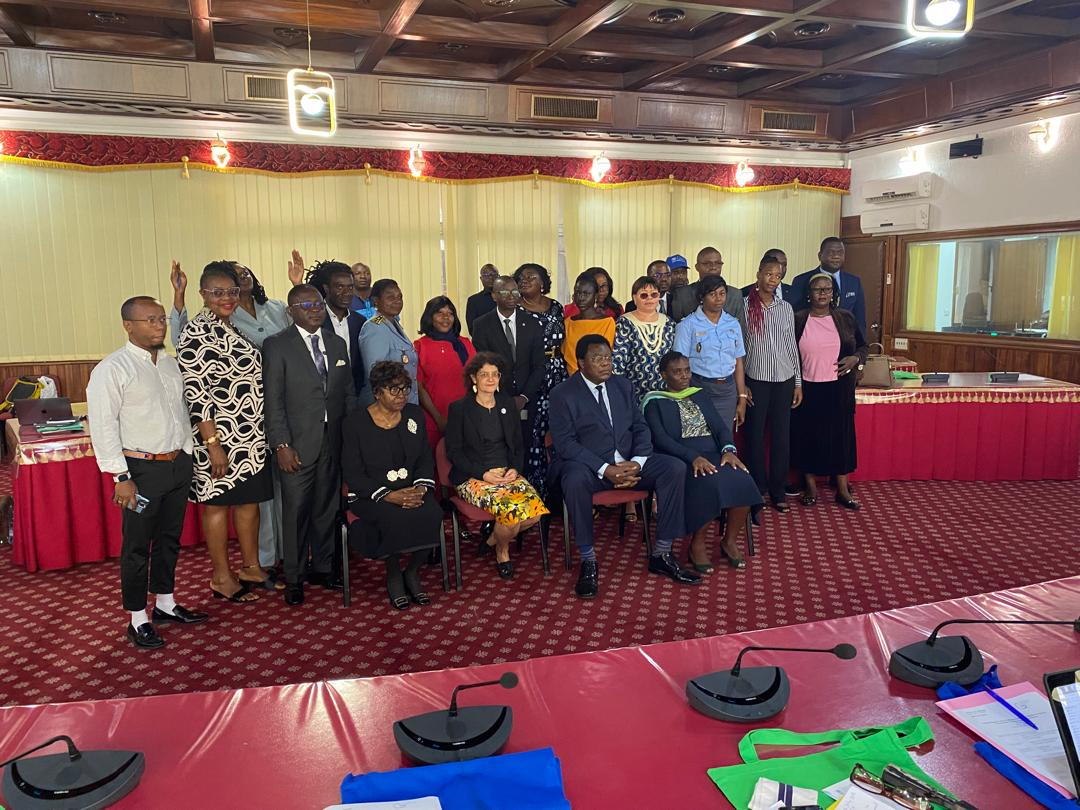
Figure 1: Officials from state and non-state institutions at the workshop on gender dynamics of human trafficking in Cameroon. Photo credit, Ernest Forbin, 25.7.2024, Yaoundé.
Our overarching aim as academic partners was to share preliminary research findings with key interlocutors and solicit their feedback. For our partners from the Ministry of Justice, as well as other workshop participants, there was a stronger emphasis on research outputs with practical relevance for addressing the issue of human trafficking. The policy brief was therefore of particular interest to them.
Planning for the workshop began in spring 2023 and involved numerous exchanges, both in person and via phone and email, during which we discussed both content and logistical arrangements. Through these discussions, we agreed to hold an internal workshop (closed to the public) with key stakeholders involved in Cameroon’s anti-human trafficking campaign. A total of 20 participants were invited, with the partners from the University of Cologne and the Ministry of Justice in Yaoundé each suggesting 10 participants. In terms of logistics, the tasks were shared evenly, with the partners from the Ministry of Justice taking responsibility for the venue and communication with invited participants and the partners from University of Cologne taking charge of expenses and workshop accounting. We jointly designed an interactive format with sessions that enabled participants to deliberate on key questions in small groups (Figure 2).
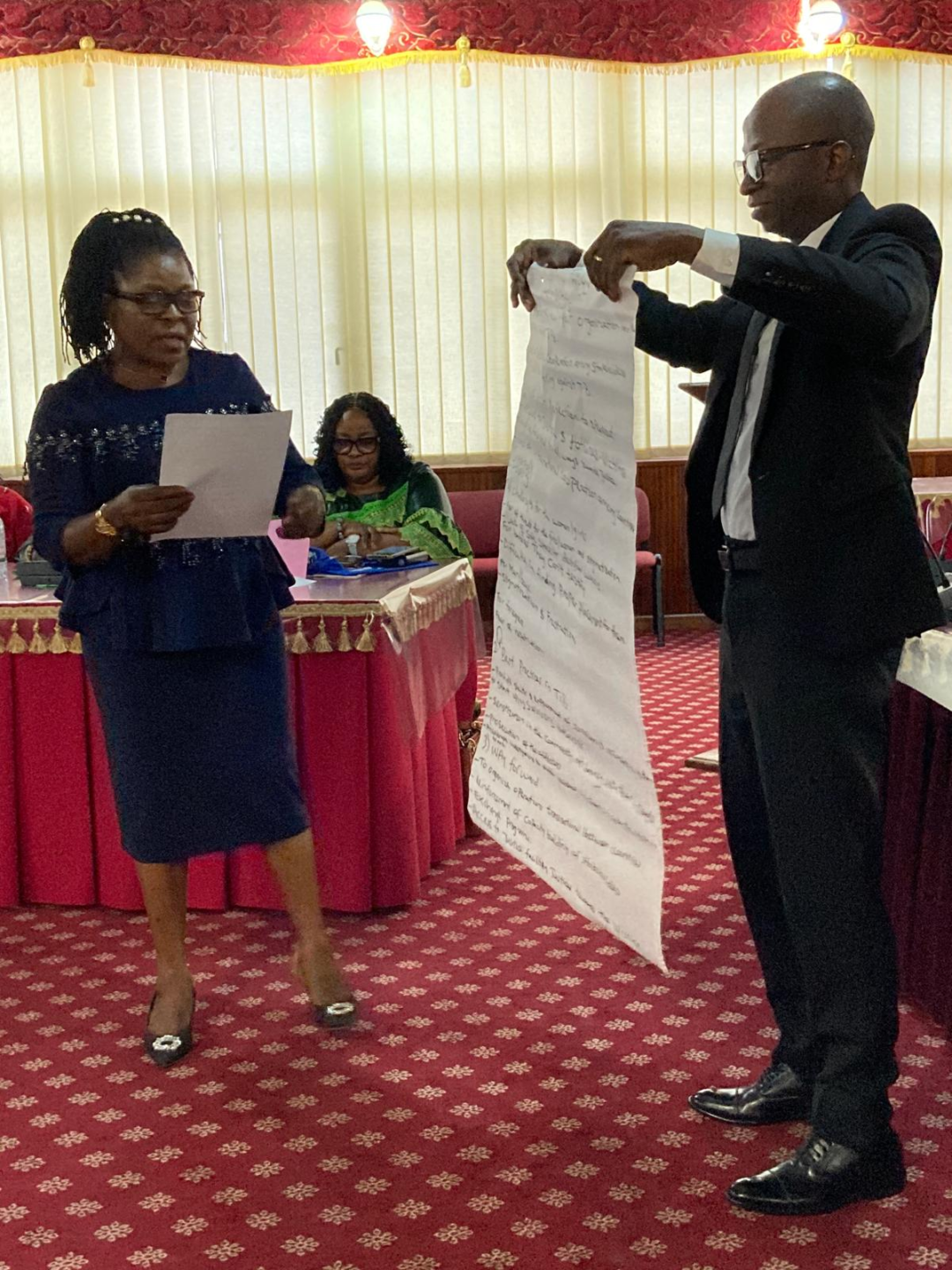
Figure 2. The speakers of one of three working groups presenting their responses to the questions we deliberated at the workshop. Photo´credit: Michaela Pelican, 25.7.2024, Yaoundé.
Navigating Divergences to Ensure the Co-Production of Knowledge
Throughout the course of this collaborative project, we encountered a range of disagreements, both substantive and practical. In this section, we concentrate on two key content-related disputes. We examine how these disagreements were negotiated through deliberative processes, which led to a resolution in one instance and an impasse in the other. While both cases concerned questions of gender, they differed markedly in specific points of contention.
Academic Notions of Gender Were Seen as Too Abstract and Not Useful for Solving Practical Problems
The first disagreement revolved around the concept of gender. Our partners from the Ministry of Justice expressed concern that academic definitions of gender were too abstract and not particularly useful for addressing the practical challenges they encountered in their work with people vulnerable to human trafficking.
The discussion on gender arose in the final stages of preparing the planned group work session. It started with our partners pointing out the notable omission of any discussion on gender in the workshop program. This was a significant observation, given that gender featured prominently in the workshop title. It also reflected their close and critical engagement with the planning process and workshop’s content, an engagement that we greatly valued and appreciated. We jointly opted for addressing the gender omission by making it part of the group work session, in which participants would discuss a set of questions in small groups and present their findings. At that point, we had already agreed on three questions to guide the group discussions (see Table 1). In response to our partners’ feedback, we proposed adding a follow-up question on gender to Question 1: “How does gender play a role in your work?”
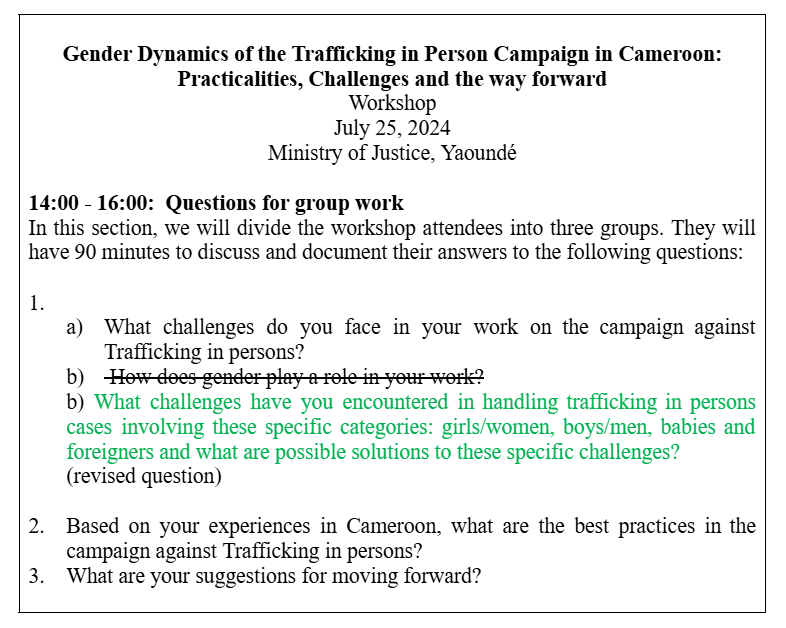
Table 1: Questions for Group Work at Human Trafficking Workshop with Key Stakeholders in Yaoundé.
However, our partners emphasized the need to clarify what was meant by „gender“ to ensure a shared understanding among participants. They found our proposed definition of gender—as socially constructed roles, behaviors, and expectations assigned to individuals based on their sex—to be overly academic and difficult to apply in their professional contexts. Instead, they operationalized gender as the differential treatment of people based on the following categories, informed by their legal practice: girls/women, boys/men, babies, and foreigners. We adopted this definition for the workshop and revised question 1b accordingly (see Table 1). This definition is also reflected in the co-authored policy brief.
From an academic perspective, our partners’ understanding of gender may appear rather broad and misaligned with scholarly definitions that emphasize the concept’s historical, structural, and ideological foundations. However, from the standpoint of our partners, the strength of their definition lay in its simplicity and practical relevance to their daily work. They explained that these categories (girls/women, boys/men, babies, and foreigners) refer to different groups, each of whom is vulnerable to specific forms of exploitation and human trafficking. For instance, as legal practitioners at the workshop explained, foreigners who are victims of trafficking often hesitate to seek justice because they fear being harassed or prosecuted for immigration violations. This directly contradicts the Palermo Protocol, which obliges states to protect trafficking victims and not forcefully return them to the country from which they were trafficked against their will. As our partners explained, such tangible, context-specific vulnerabilities were also associated with the other categories they had listed. This justified their call for a classification of gender that speaks to the concrete problems they sought to address in practice.
Impasse Resulting from the Partners’ Rejection of Our Academic Findings on Gender
During our discussions with the partners in Yaoundé on the subject of gender, we illustrated how gender dynamics were reflected in our research by sharing a key finding: A current theme that emerged in several of our previous conversations with state and non-state actors was the role of tradition and culture in facilitating specific forms of exploitation. The debate centered on the question of whether some cultural practices in Cameroon should be classified as human trafficking under the Palermo Protocol—a question to which our interlocutors had different responses, seemingly diverging between male and female respondents.
One such practice is the placement of children whose parents cannot afford to support them in school with wealthier relatives, family friends, or acquaintances (usually within the country but occasionally also abroad). In these arrangements, the children commonly assist with domestic work in exchange for being sent to school or receiving vocational training. In many cases, this arrangement functions as intended and all parties are satisfied. In other instances, however, the children end up being exploited and denied the promised education or training. Multiple cases of children’s exploitation and trafficking—some involving Cameroonian nationals living in the United States—had been publicized over the years and had resulted in repeated pressure from the U.S. State Department and the International Organization for Migration (IOM) on the Cameroonian government to make stringent efforts to eliminate this and similar cultural practices. Several of our interview partners took offense with this international pressure, arguing that the Palermo Protocol was Eurocentric and misinterpreted African traditions of solidarity as acts of human trafficking. Among them were also members of the “Anti-Trafficking Inter-Ministerial Committee” (IMC), the agency in charge of coordinating the national campaign against human trafficking in Cameroon, who called for greater cultural sensitivity in interpreting the Palermo Protocol.
In analyzing our data, we discovered that within our set of practitioners interviewed, Cameroonian men were more likely to sympathize with the above argument than Cameroonian women. While acknowledging the traditional roots and cultural importance of child placement, the women generally emphasized that traditions were not fixed and that reforms were necessary to protect children from exploitation. After presenting this finding to our two workshop co-organizers, both women and legal professionals, they disagreed with our analysis. They asserted that practitioners with legal training do not interpret the issue of human trafficking differently because they are men or women but based on their factual analysis, thereby emphasizing the presumed objectivity of legal practitioners. After the workshop, we discussed the same finding with a senior female judge who echoed the response of our collaboration partners, insisting that legal scholars are trained to evaluate facts objectively and thus ought to be neutral.
As we were unable to convince our partners of the significance of the gender divide in our research, we chose to omit this aspect from the workshop presentation of our findings. This decision reflected both our extensive discussions on the matter and the time constraints of the one-day workshop. While the topic did not resurface during the event, this moment of dissent was revealing. It highlighted divergent interpretations of our data as well as differing professional ethics between academic researchers and legal practitioners. For academics like us, upholding scientific rigor was paramount. For our partners, however, neutrality and objectivity were core to legal expertise and thus shaped their professional practice and identity.
Conclusion
This blog’s analysis shows that inclusive research collaborations among diverse stakeholders can foster co-production of knowledge, yet profound divergences may impose inherent limits. Of the two content-related disagreements examined, one was resolved through compromise, while the other led to an interpretive impasse rooted in differing fields of engagement and professional ideals.
The first concerned our shared understanding of gender. We set aside an abstract academic definition in favor of practical classifications that aligned with our partners‘ professional needs. The second remained unresolved: Our partners rejected our finding that male and female judges held differing views on the impact of traditional practices on human trafficking, which we saw as reflecting underlying gender and power dynamics in Cameroonian society. As our interpretation stemmed from empirical analysis, we could not discard it despite our partners’ alternative interpretation and reference to professional standards. We frame such impasses not as failures but as markers of collaboration‘s boundaries across fields of action.
Despite these tensions, the workshop yielded productive exchanges among legal practitioners, academics, and policymakers. Participants—many invested not only professionally but also personally—valued the workshop as a rare opportunity to jointly advance knowledge production and dissemination across fields of action. They contributed enthusiastically to the co-authored policy brief, offering actionable insights. While the process of workshop planning revealed a slight mismatch between academic expectations and partner priorities, the joint output endured. Divergences on gender definitions or the gendered uptake of cultural norms did not undermine the policy brief but instead highlighted challenges in achieving unified interpretations across academic and practitioner perspectives. More broadly, our analysis shows that recognizing such limits strengthens collaboration by embedding negotiation and mutual acceptance as essential processes. Ultimately, it informs more realistic and resilient designs for inclusive knowledge co-production between these distinct domains.
Bibliography
Aijazi, O. et al. 2021. “The Ethnography of Collaboration: Navigating Power Relationships in Joint Research.” Collaborative Anthropologies 13 (2): 56-99. https://dx.doi.org/10.1353/cla.2021.0003.
Chambers, R. 1994. “The Origins and Practice of Participatory Rural Appraisal.” World Development 22 (7): 953–969.
Fricker, M. 2007. Epistemic Injustice: Power and the Ethics of Knowing. Oxford University Press. https://doi.org/10.1093/acprof:oso/9780198237907.001.0001
Holliday, A., and S. Amadasi. 2020. Making Sense of the Intercultural: Finding DeCentred Threads. Routledge.
Huynh, T., J. Ngeh, and M. Pelican. 2026. Towards Parity in Migration Research with African Migrants in China and the UAE. In Sage Research Methods: Inclusive Research Methodologies. SAGE Publications. https://doi.org/10.4135/9781036250676.
Katz, J., and B. R. Martin. 1997. “What is Research Collaboration?” Research Policy 26 (1): 1–18. https://doi.org/10.1016/S0048-7333(96)00917-1.
Kembo Takam Gatsing, H. 2023. Human Trafficking and Smuggling in Cameroonian Courts: A Journey Into a Decade of Discovery of a Multifaceted Phenomenon (2011-2021). Les Grandes Editions
Lassiter, L. E. 2005. The Chicago Guide to Collaborative Ethnography. University of Chicago Press.
Lepore, W., B. L. Hall, B. L., and R. Tandon. 2021. The Knowledge for Change Consortium: A Decolonising Approach to International Collaboration in Capacity-Building in Community-Based Participatory Research. Canadian Journal of Development Studies 42 (3): 347-370. https://doi.org/10.1080/02255189.2020.1838887.
Martin, S. B., and D. Dandekar (Eds.). 2021. Global South Scholars in the Western Academy: Harnessing Unique Experiences, Knowledge, and Positionality in the Third Space. Routledge.
Ngeh, J., and M. Pelican. 2025. “The Human Trafficking Campaign in Cameroon: Key Actors, Common and Competing Interests.” Zanj: The Journal of Critical Global South Studies 8 (1/2): 236-59. https://doig.org/10.13169/zanjglobsoutstud.8.1.0012.
Ngeh, J. 2024. “Gender Dynamics of ‘Human Trafficking:’ Migration from Cameroon to the Gulf Cooperation Council (GCC) States.” Journal of Asian and African Studies 59 (7): 2243-56. https://doi.org/10.1177/00219096241283656.
Pelican, M., and J. Ngeh. 2025. „Towards Parity in Knowledge Production within the Framework of North-South Collaboration.“ In Decolonizing the Future Academy in Africa and Beyond: Institutional Development and Collaboration, edited by Michaela Pelican, Karim Zafer, and Michael Bollig. Transcript Verlag.
Pratt, B., and J. de Vries. 2023. “Where is Knowledge from the Global South? An Account of Epistemic Justice for a Global Bioethics.” Journal of Medical Ethics 49 (5): 325–334. https://doi.org/10.1136/jme-2022-108291.
Walsh, A. 2007. “Ethnographic Alchemy: Perspectives on Anthropological Work from Northern Madagascar.” In Anthropology Put to Work, edited by Les Field and Richard G. Fox. Routledge.
Wölki, M., J. Ngeh, and M. Pelican. 2026. “Urban Youth and Future-Making in Cameroon.” Kölner Arbeitspapiere zur Ethnologie / Cologne Working Papers in Cultural and Social Anthropology 13.
Jonathan Ngeh is a senior researcher affiliated with the Global South Studies Center (GSSC) Cologne. His research examines social inequalities, including labor exploitation, unequal power relations, and social exclusion. His regional focus includes the Arab Gulf states, Northern Europe, and West Africa. He is currently co-authoring a monograph with Tu Huynh and Michaela Pelican, titled Parity in Research: The Third Space of Knowledge Production (Routledge), which offers an in-depth exploration of co-producing knowledge.
Michaela Pelican is a professor of social and cultural anthropology at the University of Cologne. She serves as the rector’s representative for international affairs and is the speaker of the Global South Studies Center Cologne (GSSC). Her research focuses on migration, inequality, conflict, indigeneity, and research methodology, with a regional emphasis on West Africa, the Gulf States, and China. She co-edited the volume Decolonising the Future Academy in Africa and Beyond: Institutional Development and Collaboration (transcript 2025) with Karim Zafer and Michael Bollig, which addresses critical questions about North–South collaboration in research.