










































 | 10/09/26 |
Exhibiting Sufi Art and Culture in France
Methodologies to Convey the Spiritual
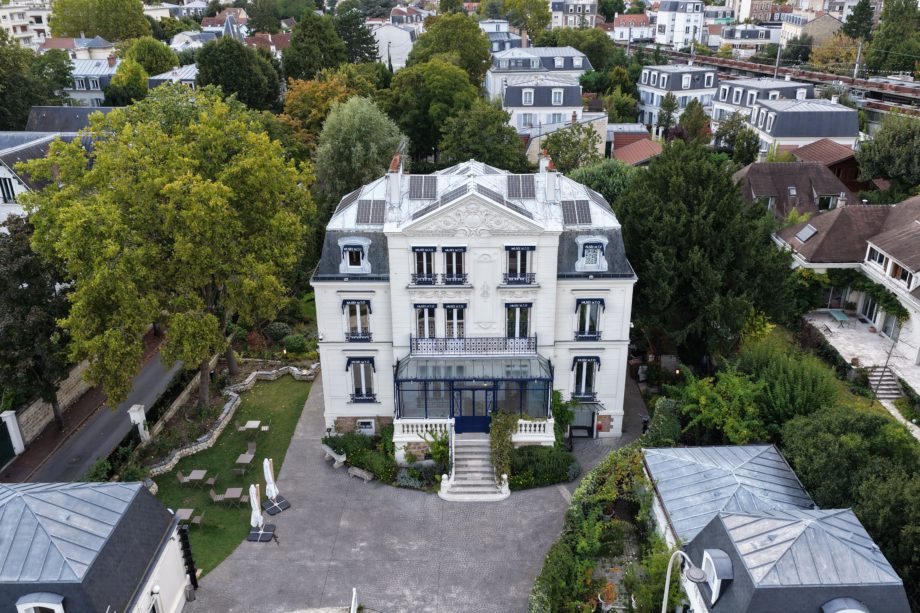
Fig. 1 The museum’s front © Varvani GmbH
Introduction
The Musée d’Art et de Culture Soufis MTO® (MACS MTO®) is the first museum in the world dedicated to exploring the principles of Sufism and its artistic and cultural expressions. Housed in a 19th-century mansion in Chatou, on the outskirts of Paris, it features a unique permanent collection of objects related to Sufism and contemporary artworks lent by artists, as well as galleries from around the world.
Generally defined as the spiritual aspect of Islam, Sufism is considered a path of spiritual elevation in which devotion expresses itself through an inner journey. The first Sufi masters are attested from the early days of islam in the 7th and 8th centuries. The name Sufism became common in Western languages in the 19th century, though classical Islamic texts used the Arabic term taṣawwuf to describe the practice. While taṣawwuf’s etymology is debated, interpretations converge around renunciation, purification, and inner refinement as means to self-knowledge.
The project was initiated by the MTO Shahmaghsoudi School, a Sufi school dating back to Uways al-Qarani (594–657) which flourished mainly in Iran and is now present worldwide. Today, the museum is a French association financed solely by private funds. The museum ultimately aims to establish itself as a permanent landmark in the French and international cultural scene.
Several museums around the world are dedicated to specific Sufi schools and contexts. The best-known example is the Mevlâna Museum in Konya, originally a Sufi lodge, but other examples exist in other parts of the world. In Europe and Northern America, Sufism is often mentioned in museums in a rather anecdotal or superficial way.i Some rare exhibitions or displays recently dedicated more space to Sufi cultures.ii
Since its opening in September 2024, each exhibition at the MACS MTO carries a strong spiritual charge that confronts me, as head of conservation and art historian, with methodological and ethical questions. The challenges of my institution are many: how to give a taste of the universality of Sufi art and culture in 500 m² of exhibition space? How to respectfully and accurately exhibit a complex practice that has existed for centuries and continues to be followed in many different ways by billions of people? How to present Sufism, which is very little known in France, to a general public, while answering more in-depth questions from academic and/or practicing audiences?
The workshop “Museum Charge(s): Curating Spiritual Presences” helped me further articulate these dilemmas through feedback from fellow researchers, curators, artists, and museum professionals, and through comparisons with issues and concerns we have in common. It soon appeared that the first specificity of my case is the provenance of the collection. Unlike colleagues such as Susanne Rodemeier, curator at the Marburg Museum of Religions, the question of the objects’ provenance in a colonial context does not arise in my institution. Indeed, the MACS MTO’s collection was not collected by Western explorers or collectors. Mainly consisting of objects from Iran and Central Asia, the collection belonged to a Sufi school and was placed in the museum’s care through a permanent loan. But this origin raises other questions of ethical and collaborative museology.
The contributions of various participants highlighted several common issues:
- The respect due to the symbolic and spiritual significance of objects applied to conservation, restoration, and presentation to the public;
- The necessity to take into account the perspectives of practicing communities and involve them in the museum’s scientific discourse;
- The dialogues engaged with contemporary artists, particularly those who are unfamiliar with the spiritual and/or religious practices presented;
- The search for new methods to highlight intangible practices;
The following development is my attempt to provide a methodological answer to these topics, with examples taken from the latest exhibitions at MACS MTO.
Beyond Orientalism: the respect of the objects’ symbolic value
A core characteristic of Sufism is its rich symbolism, mainly known through poetry, and material culture. In Sufi thought, each reality is expressed through an external form (ẓāhir) and an internal meaning (bāṭin) (Chittick 2015 ; Esposito 2004). Images and metaphors, such as the references to wine, physical beauty and earthly pleasures, are widely used to convey teachings, illustrate subtle or deeper spiritual concepts, and help the students reflect on and fully understand the chosen subjects (De Brujin 1997). Therefore, symbolism is understood as a method in itself at the MACS MTO: the first floor of the museum is mainly devoted to the symbolism of objects such as canes, rosaries, locks, etc. Two types of artefacts receive special attention in how they are restored and displayed: kashkūls (containers carried by dervishes, a term I will define later) and khergheh (cloaks).
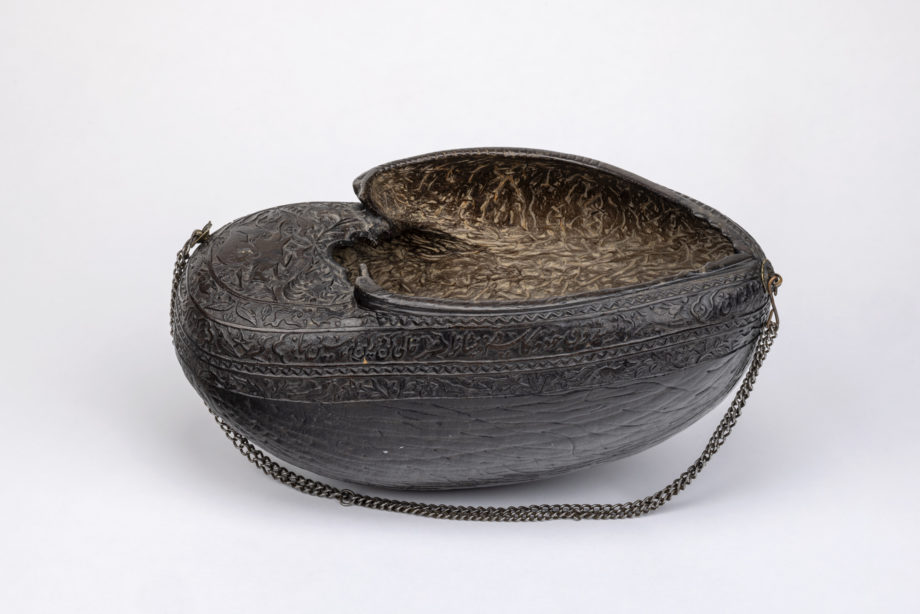
Fig. 2 A 19th-century coco de mer kashkūl with a hunting scene. Historic collection of the MACS MTO © Jean-Yves Lacôte
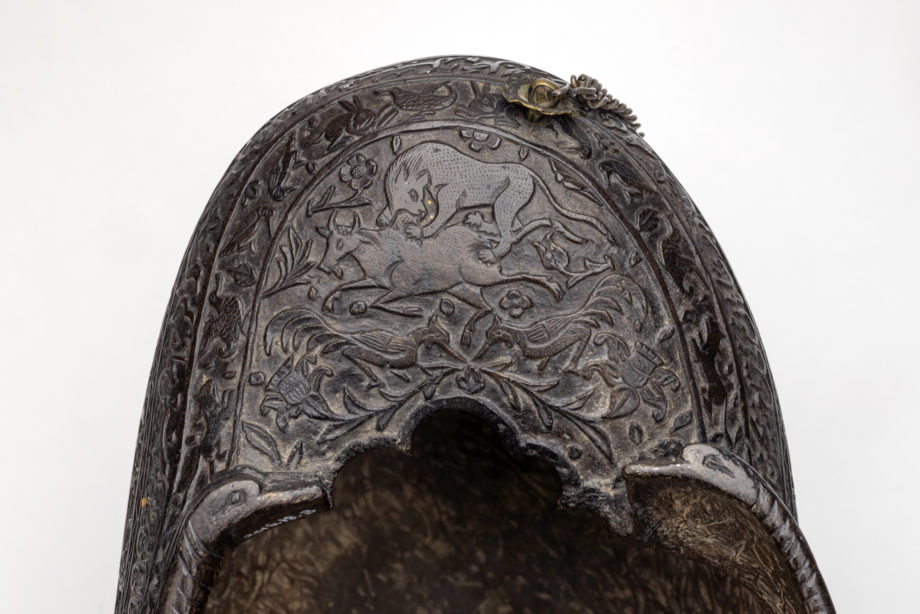
Fig. 3 A 19th-century coco de mer kashkūl with a hunting scene. Historic collection of the MACS MTO © Jean-Yves Lacôte
Present in many museum collections worldwide, the kashkūl is inseparable from the image of the Sufi. The Persian etymology of the word conveys the idea of carrying this object on one’s shoulder (Qazvini and Kermani 2018). Its hollow oval shape symbolizes renouncing material attachments and refers to the spiritual poverty of its owner, who is ready to receive divine knowledge. Given its profound meaning, craftspeople and artists turned this object into a true work of art, crafted from a variety of materials including wood, metal, and ceramics, and sometimes adorned with fine decorations. In Iran and Central Asia, kashkūls were made from coco de mer, the fruit of a palm tree native to the Seychelles. Carried by the waves, they are believed to have washed up on the shores after a long and arduous journey, similar to that of the Sufi disciples on their inner, spiritual quest.
Displayed in museums around the world, these objects are most often simply placed on a display case shelf or hung on mannequins in a staging of the figure of the wandering dervish. The very concept of dervish, whose Persian etymology evokes spiritual poverty, has been the subject of numerous superficial interpretations in Europe and North America. It is sometimes associated with the expression “whirling dervish” describing the Sufis followers of the Mevlevi school, or with the antinomical hermit belonging to the Qalandar school depicted in ethnographic photographs of Central Asia in the early 20th century (Karamustafa 2014; Micklewright 1992; Zarcone 2013). However, dervish in its strictly spiritual sense refers to the “seeker,” the one who follows a path of detachment from earthly possessions (Ebrahim and Hirtenstein 2017).
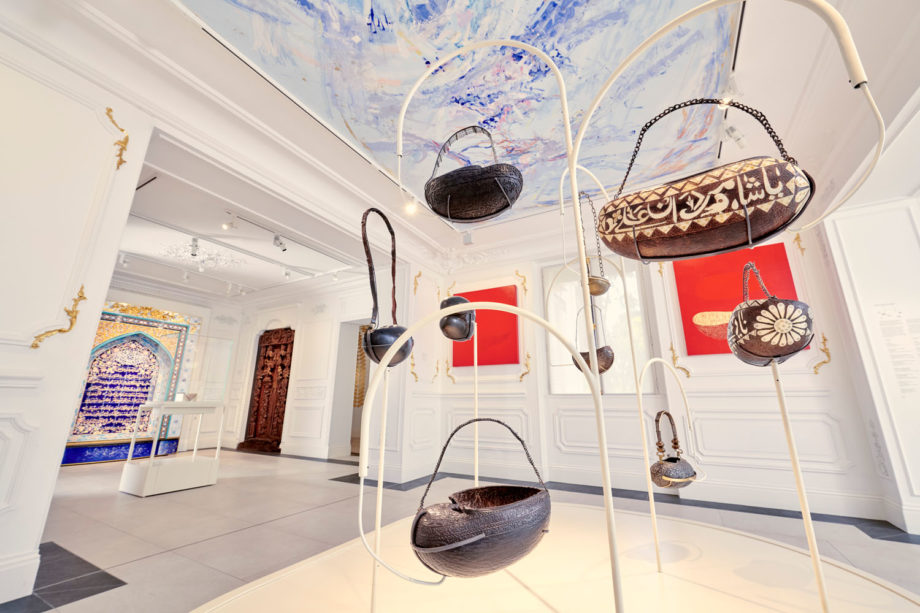
Fig. 4 The kashkūl installation (conception by Le Socle) of the MACS MTO during the first exhibition. © Flint culture
To highlight this object, the MACS MTO has given it pride of place at the very beginning of the exhibition. The display consists of three vertical bars fixed to a base, each holding a kashkūl and two “trees,” the first bearing three coco de mer kashkūl, the second three metal ones. The rounded body of the object is nestled in a cradle and the chain is supported by an arch above, allowing visitors to see the object as it would have been worn on the shoulder.
The whole ensemble is almost designed like a contemporary sculpture. The absence of glass allows unprecedented proximity to the artefact, and the pedestal display creates a unique sense of lightness. The success of this presentation is due to several contributors: the curators, the scholars specialized in Sufism and the display designers and museographers.
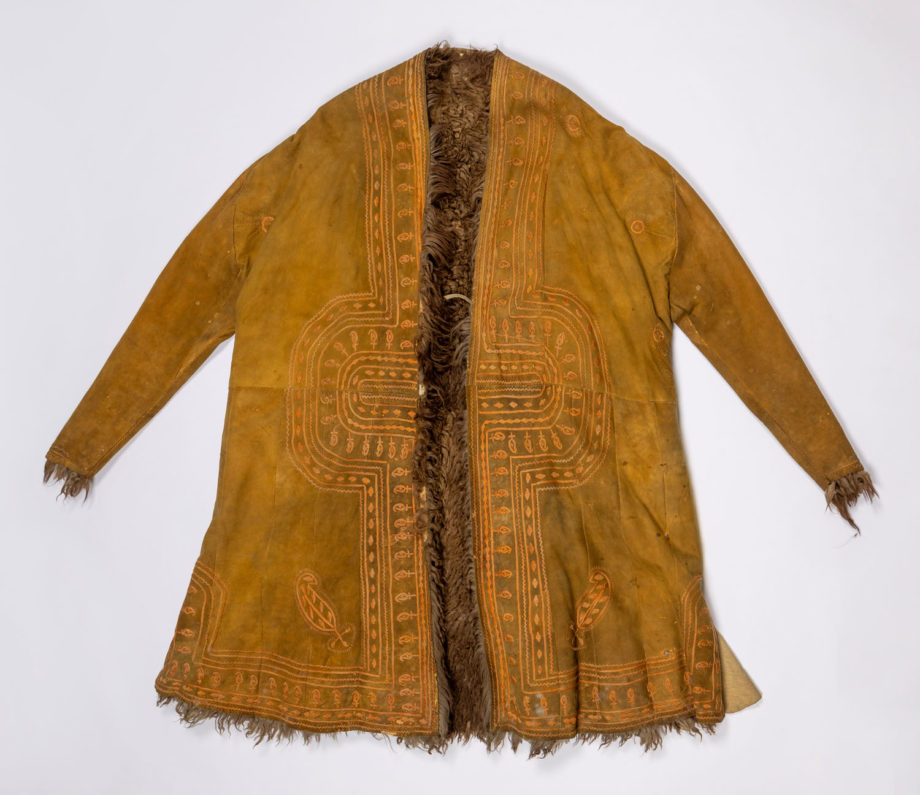
Fig. 5 A 20th-century Iranian Khirqa (robe) Sheepskin embroidered with cotton thread Historic collection of MACS MTO Photography © Jean-Yves Lacôte
Wool cloaks called khirqa or khergheh are another significant example of artifacts steeped in symbolism. While Sufi attire varies from one school to another, certain garments distinguished by color or materials have major spiritual significance. Made of rough wool or sheepskin, the khirqa symbolizes humility, detachment from worldly concerns, and the openness of the heart.
In some Sufi orders, it embodies the master’s spiritual authority, passed on to the disciple deemed ready to carry on the teaching.i The gesture of draping the cloak on the shoulders of the masters’ successors is a reminder of the story in which the Prophet Muhammad draped his robe over his family members, hence, the Arabic expression Ahl al-Kisā’ or Ahl al-‘Abā, meaning “the People of the Robe” (Esposito 2004, 9).
The museum’s khirqa and khergheh belonged to masters of the Oveyssi school of Islamic Sufism and have been passed down from the end of the 19th century to the present. These are unique and irreplaceable pieces that embody the concept of spiritual transmission and the presence of the masters of the past.
This high spiritual value has a direct impact on curatorial choices, and conservation and restoration decisions. Special instructions are given to the restorers, who are also responsible for mannequin display: the khergheh are never presented closed, but always open, in keeping with their symbolic meaning and the way they were worn over clothing. Signs of wear and visible repairs made by owners or caretakers were not removed, to testify to the garments’ journey. Here, compliance with specific standards is necessary for the object to retain its spiritual significance. This method guarantees the authenticity of the museum’s approach and demonstrates respect for Sufi practices. This aspect echoes Valentina Gamberi’s curatorial project analysing the sensitive topic of objects’ desacralization in museum collections.ii
The art of listening: exhibiting samā’ and working with practitioners
During the workshop, my experiences echoed strongly with Sili Rout’s presentation. Drawing on reflections on curatorial choices at Indira Gandhi Rashtriya Manav Sanrahalaya (IGRMS), she explained the relevance of community participation to the display of religious artefacts in museums. The point she raised about the spiritual agency of communities whose practices are presented in museums particularly struck me. Curators cannot and should not work alone on such subjects: collaborative work with scholars, source communities, and other professions is the only way to avoid reproducing patterns of thinking steeped in Orientalist and colonialist patterns.
In discussions at MACS MTO, this intention is reflected in the museum’s organisational structure: a scientific committee composed of scholars specialized in Sufism and its artistic expressions and/or islamic art, Sufi practitioners and musicians, ethnomusicologists and professionals from the world of French museums oversees the scientific discourse and allows a plurality of voices to be heard. This advisory body acts as a safeguard to ensure the museum’s credibility.
As an art historian who is not a specialist in Sufism, I see this collaborative work as a great opportunity. The expert advice and guidance of the scientific committee members are invaluable for presenting certain artefacts correctly. I will take the example of another type of Sufi attire, the service garment (lebās-e khidmat), which required special attention for the latest exhibition.
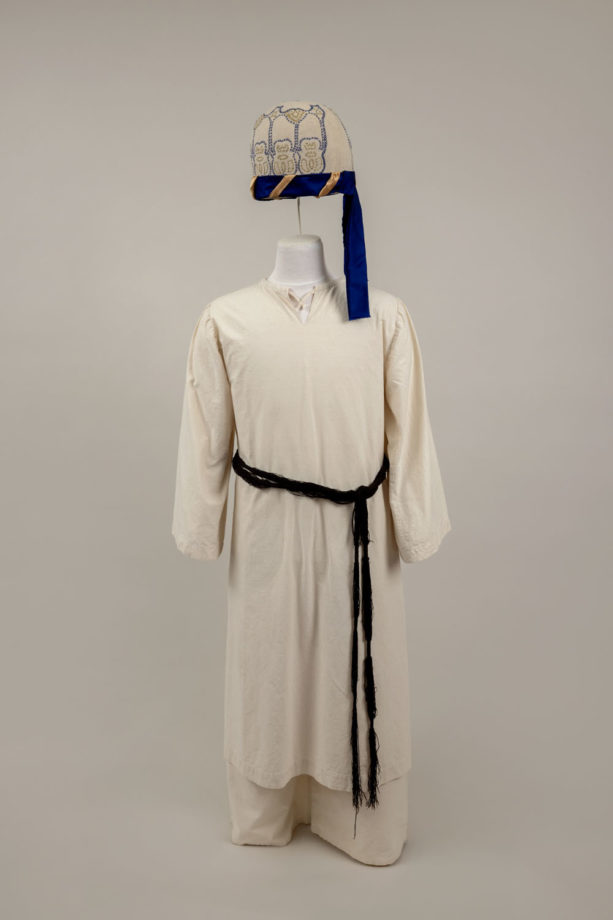
Fig. 6 Iranian 20th-century service garment with zonnar belt and samā‘ hat (UK, 2014) White cotton, black cotton threads, white wool felt embroidered with blue cotton thread and metallic thread, blue and gold silk satin ribbon Historic collection of MACS MTO Hat : Courtesy of MTO Zendeh Delan® Photography © Jean-Yves Lacôte.
Service garments are usually plain, white, and closed at the front, symbolizing the disciple’s commitment to their inner spiritual journey. The immaculate color is reminiscent of the shroud (kafan in Arabic), the simple, perfumed white cloth that envelops the deceased.i The belt tied at the waist of the garment, called zonnar, is of singular importance in Sufi practice. Tied in a specific manner, it represents the strands of one’s being, the many qualities, tendencies, and capacities that make up the human self. Binding these strands together around the waist symbolises readiness and sincerity to begin the spiritual journey.
The length of the zonnar, the number of strands, and the distance between each knot carry both functional and symbolic meaning within the tradition. In a curatorial context, this belt is tied by samā‚ practitioners known to the museum team, or at least according to their precise instructions. These moments when the curator or restorer steps aside to make room for Sufi practitioners are of paramount importance.
For the exhibition “Quand le miroir se souvient du pas” (“When the Mirror Remembers the Trace”), the 20th-century service garment is displayed with a hat of recent manufacture which is specifically used for current samā‚ practice by the Zendeh Delan® ensemble.
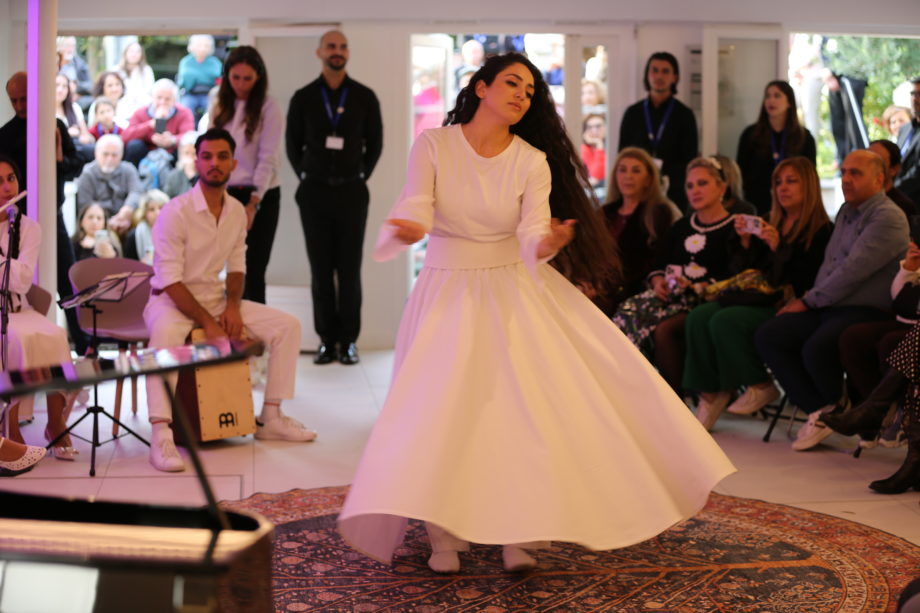
Fig. 7 Samā‘ demonstration at the museum by the ensemble Zendeh Delan® Photography © Varvani GmbH
Samā‚ (“audition” in Arabic) is a contemplative practice combining singing, music, and body movement. The ceremonial splendor of this tradition is mostly known in Europe through the practice of followers of the Mevlevi order, incorrectly referred to as “whirling dervishes”. Yet at its heart, samā‚ is understood and practised by Sufis as spiritual audition, deep listening and a pathway to inner transformation. Practitioners gently revolve around themselves like the planets around the sun at the same speed. Some gestures express distinct states or emotions, such as one hand pointing to the sky to collect divine grace, and the other pointing to the earth to redistribute it to humankind.
Presenting the service garment and the samā‚ hat together allows us to explore certain spiritual concepts within the exhibition. For example, in Sufi terminology, “service” (khidmat in Arabic) is a form of commitment in which the student consciously devotes themselves to altruistic and charitable efforts, while practising humility, sincerity, and shedding one’s ego. Furthermore, this presentation echoes the way the MACS MTO organises samā‘ demonstrations alongside Sufi musical ensembles. The museum makes a point of never presenting this practice as a performance or a dance, which would undermine its profound spiritual meaning.
A successful dialogue with a contemporary artist: Rada Akbar and Haft Peykar
Collaboration with contemporary artists was another topic discussed during the workshop. For some of my colleagues, these collaborations have been fruitful, whereas for others, they have ended in misunderstandings or additional difficulties. Ipek M. Sur and Katharina Sabernig noted that contemporary art can act as an intermediary, capable of defusing tensions arising from religious and/or spiritual taboos.
Within my institution, this collaboration is part of the museum’s DNA. To enable visitors from all backgrounds to relate to the museum’s discourse and to shape their own visit experience, the MACS MTO seeks to highlight artistic creativity and the universal concepts common to all forms of Sufism. The museum also firmly believes that contemporary art is often best suited to conveying certain abstract and metaphysical concepts. Collaborating with contemporary artists from all around the world not only allows the museum to remain rooted in the present but also opens up dialogue with other cultures and backgrounds. As such, the team insists on engaging not only with artists who practice Sufism or are aware of it, but also with those who do not.
To demonstrate, I wish to give an example of a recent successful collaboration. For its second exhibition entitled “Corps à cordes : Vibrations et résonances” (“Resonant: Bodies, Songs and Strings”), the MACS MTO invited the curatorial collective RCI (Initiative for Practices and Visions of Radical Care), represented by Elena Sorokina, Simona Dvorak and Nataša Petrešin-Bachelez, to create an exhibition project. On this occasion, the conceptual artist, photographer and activist Rada Akbar (Kabul, 1988) worked closely with the museum’s team.
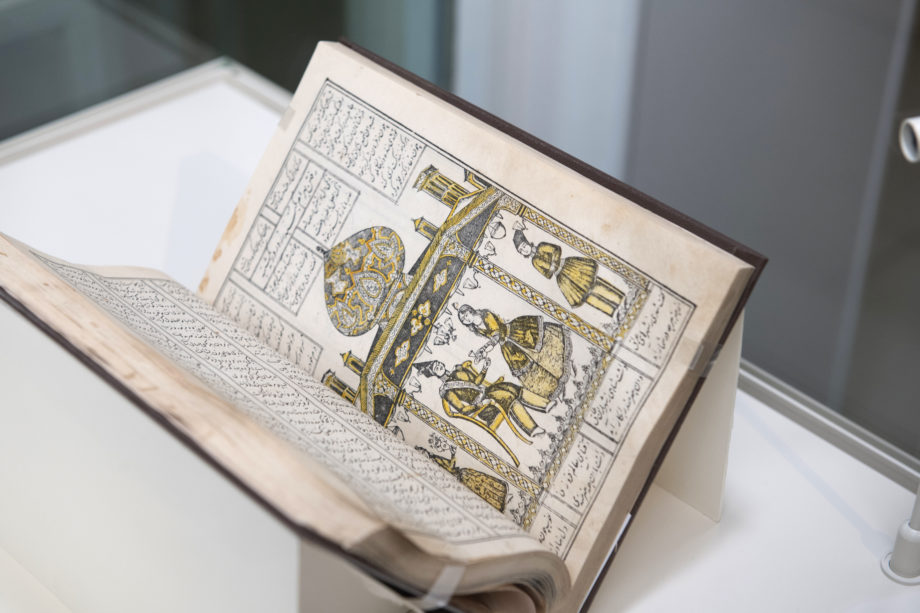
Fig. 8 A 20th-century lithographed edition of the Khamseh (The Five Treasures), opened to a page from the Haft Peykar (The Seven Beauties). Historic collection of MACS MTO
For this exhibition, Akbar drew on the rich symbolic system of Haft Peykar (Seven Portraits), a classic of Sufi-connoted literature. This poem, written in 1197 by Nizami Ganjavi, is among the most famous texts in ancient Persian literature. Haft Peykar tells the story of the Sassanid King Bahrām Gūr (r. 420–438/39 CE) on his journey of enlightenment. He discovers seven portraits of beautiful princesses and falls in love with them. To honor them, he builds seven uniquely colored pavilions and visits a different one each night for a week. In a Sufi context, the poem has deep underlying meanings (Talattof and Clinton 2000).
According to Sufi scholars such as ‘Ibn Arabi, Al-Ghazali or Junayd Baghdadi, spiritual elevation happens in seven stages, also called stations (maqām in Arabic) (Sells 1996 ; Schimmel 1975). The Sufi interpretation of this tale would allow each princess to be identified with each station. Furthermore, the symbolic richness of the poem assigns each of them a day of the week, a part of the world, a color, and a planet (Cross 2016).
Inspired by this literary masterpiece, Akbar created for the museum two sculpted, paper-cut dresses representing the Queen of the Sun and the Queen of the Moon. The princess of the Sun, associated with yellow, appears second in the tale, on Sunday, whereas the princess of the Moon, associated with green, is visited on a Monday. Akbar incorporated traditional Afghan craft techniques and materials and borrowed from the visual codes of Persian miniatures. Each piece stands as a tribute to the women who have preserved poetry and cultural memory across generations.
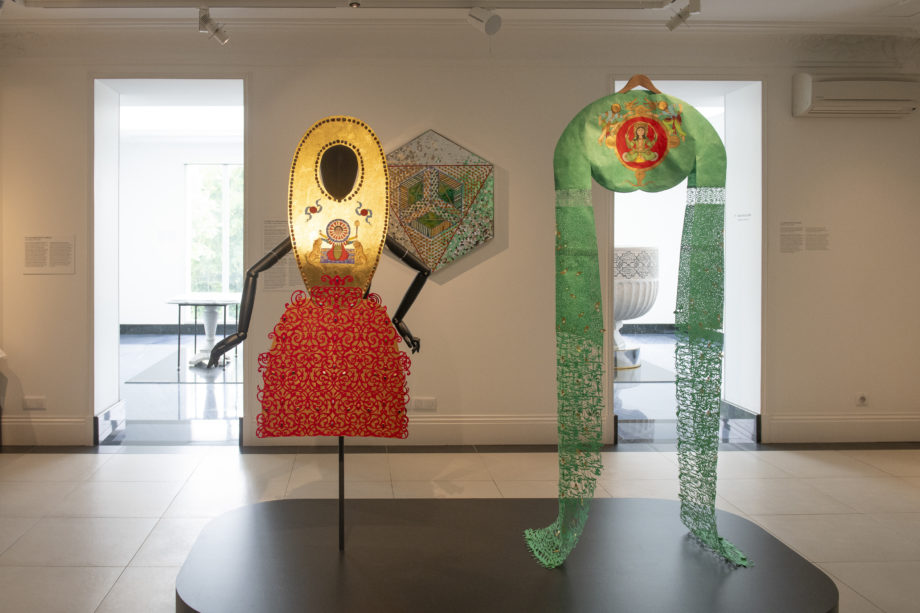
Fig. 9 Rada Akbar, The Queen of the Sun No2 and The Queen of the Moon No3; From The Roarers series, 2025. Sculpted paper dress, semi-precious stones, gouache, watercolor paint and gold leaf. Courtesy of the artist, with the help of Sepideh Ziaei and the support of MACS MTO
Expressing the intangible in museum space: the visitor’s experience
Fang-I Chu’s presentation emphasised visitor’s participation as a way to deactivate traumatic memory tensions. At the National Human Rights Museum, visitors are invited to write locally inspired religious petitions or intercessory prayers for the spirits of victims. The idea of participatory customization of the museum experience is, in my opinion, one of the ways communities can reclaim the space on their own terms. Regarding the latest MACS MTO exhibition, this aspect is enhanced by the thoughtful use of immersive technological tools.
From the outset, the museum wanted to use technology as a vehicle for helping visitors understand complex spiritual concepts. This approach was driven by the fact that a large part of Sufi culture is embodied in intangible practices which are difficult to grasp outside direct experience. The fine line is to avoid using technology as an entertainment and decentralization device, without crossing the fine line to proselytism.
For the latest exhibition, the museum’s team developed a VR dhikr experience, designed to provide visitors with an immersive encounter with a living Sufi practice. Rather than simply presenting this ritual through descriptive text or video, the goal is to allow visitors to observe and intuitively experience its embodied and affective dimensions through a more experiential mode of engagement.
Dhikr („remembrance“ in Arabic) is a central and distinctive practice within Sufism. While its outward form varies across Sufi schools and regional traditions, the inner aim remains consistent: the cultivation of presence, purification of the self, and nearness to the Divine. This is achieved through the repetition of the Names of God, Qur’anic verses, and phrases such as Lā ilāha illā Allāh („There is no god but God“), often interwoven with Sufi poetry. These recitations may be whispered or chanted aloud, and are frequently accompanied by breathwork, bodily movement, and rhythmic coordination (Avery 2015 ; During 2023).
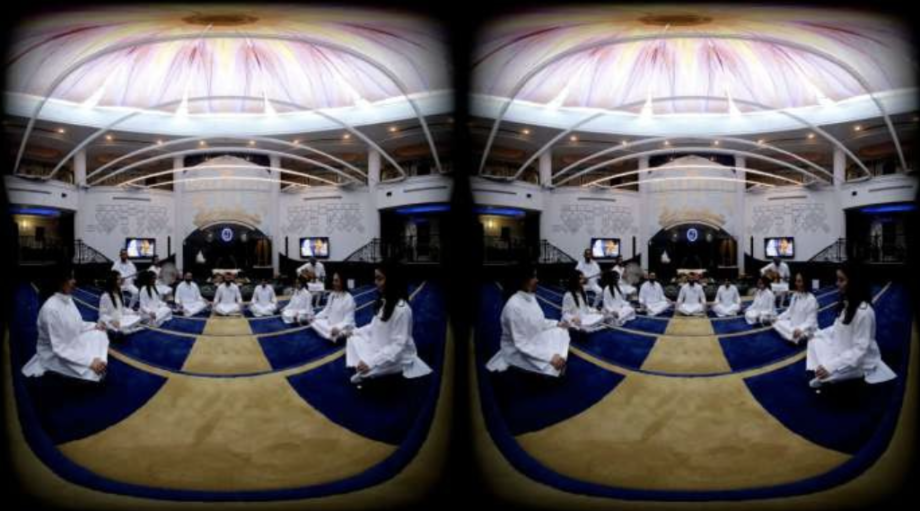
Fig. 10 Overview of the VR dhikr experience project for exhibition #3 “Quand le miroir se souvient du pas”, “When the mirror remembers the trace”
In place of a narrated or interpretive experience, the VR dhikr installation invites visitors to enter the sensory and atmospheric world of a contemporary Sufi dhikr gathering. They are to be seated near a bench and offered a headset to explore this spiritual practice through active observation, engaging not only visually but also spatially and emotionally with the ritual’s ambience.
By stepping into this immersive environment, visitors may begin to sense how ritual repetition, sonic rhythm, and collective presence shape the spiritual lives of practitioners. In this way, the installation echoes anthropological approaches that prioritize embodied experience, attentiveness, and multisensory learning as ways of understanding religious or spiritual life.
Interpretive wall texts will provide context, but the experience itself will be unmediated by narration, encouraging visitors to draw their own impressions and reflections. This approach aligns with the museum’s broader aim to present Sufi culture not only as a historical subject but as a living, evolving tradition.
From an educational machine, the museum becomes a place of open interpretation and personal reflection. The presence of curators tends to fade into the background in favour of the visitor.
Conclusion
The reflections generated by this workshop led me, in different ways, to the same conclusion: when it comes to religious or spiritual charge(s) in museums, curators must set aside their traditional persona of “all-knowledgeable” figure and work collaboratively with source communities, artists and other professionals within and outside their field. The death of the curator(s) in the traditional sense is (thankfully) confirmed, since they cannot pretend to achieve an authentic and ethical approach on their own. But what are the boundaries of such collaborations? Where do we draw the line?
Without pretending to a universal answer, in the case of the MACS MTO, methodologies were thought carefully among a diverse scientific committee:
- The symbolic and spiritual charge of objects was taken into account and informed choices about conservation, restoration and presentation to the public. Only under this condition can highly valued items such as cloaks (khirqa) be displayed in all their magnificence without being stripped of their original aura.
- In several cases, the objects are better handled by practitioners invested with deep spiritual knowledge. The museum’s active collaboration with practitioners of samā‘, notably the musical ensemble Zendeh Delan®, helps to avoid misunderstandings about the practice. On this aspect, I received very positive feedback from Ipek M Sur, curator and creative producer, who noted that this methodology resonated with her practice of care and collective healing in her work.
- Active dialogue with contemporary artists, mediated by exhibition curators where necessary, needs to happen well ahead of time for them to retain their artistic autonomy, while respecting the museum’s discourse. In the case of Rada Akbar, this collaboration has provided a tangible expression of the richness of Sufi poetry, rather than simply displaying a manuscript from the collection.
- Collegial discussion allows technology to be used appropriately to convey the intangible practices of Sufism. By giving visitors autonomy over their immersive journey, without intrusive commentary, the museum avoids the distance characteristic of the ethnographic gaze. Visitors are free to feel and make their own observations.
[i] In 2025 for example, the Musée du Louvre in Paris organized an exhibition devoted to the Mamluk period (1250-1517), in which some display cases briefly addressed Sufism through the analysis of art objects, but without delving into the practices of the time.
[ii] One installation explored this particular theme through the collections of the Brooklyn Museum and the Metropolitan Museum of Art (Akbarnia and Leoni 2010). In 2022, the exhibition “Yoga: Ascetics, Yogis, Sufis” at the Musée Guimet in Paris focused on ascetic physical and psychological practices in India, highlighting the influences and commonalities among some elements of Brahmanism, Buddhism, Jainism, and Sufism. Recently, a display at the British Museum is centered around this theme until the 26 of July, 2026.
[iii] The role of the khirqa during the investiture of Sufi masters is mentioned by Ibn al-Arabi. This symbolic gesture has its roots in the foundational narratives of Sufism, notably when the Prophet Muhammad is said to have sent his mantle to Oveys Qaranī as an attestation of his spiritual realization and recognition of his inner path. See Ibn al-‘Arabi 2021 and Spencer 1973, 183.
[iv] See Gaskell 2008, 150: “When a sacred object enters a museum we generally think of it as being desacralized”.
[v]These white garments identify the “annihilation” in God (ahl-i fanā). A classic Sufi saying attributed to the Iraqi sheikh Tustari (7th century) teaches that the aspiring Sufi is in the hands of his master like a corpse in the hands of the mortician, who cleanses the novice of his carnal dimension (Papas 2018).
References
Akbarnia Ladan and Leoni Francesca. 2010. Light of the Sufis: The Mystical Arts of Islam. New Haven: Yale University Press.
Avery, Kenneth S. 2015. A Psychology of Early Sufi Samâ`: Listening and Altered States. London: Routledge.
Cross, Cameron. 2016. „The Many Colors of Love in Niẓāmī’s ‚Haft Paykar:‘ Beyond the Spectrum.“ Interfaces: A Journal of Medieval European Literatures 2: 52–96.
Chittick, William. 2015. “The Quran and Sufism.” In The Study Quran: A New Translation and Commentary, edited by Seyyed Hossein Nasr, Caner K. Dagli, Maria Massi Dakake, Joseph E. B. Lumbard, and Mohammed Rustom. New York: HarperOne.
De Bruijn J.T.P. 1997. Persian Sufi Poetry: An Introduction to the Mystical Use of Classical Persian Poems. Richmond, Surrey: Curzon Press.
During, Jean. 2023. Musique et extase: l’audition mystique dans la tradition soufie. Paris: Éditions du Cerf.
Ebrahim, Alireza and Stephen Hirtenstein. 2017. „Darwīsh (Dervish)“. In Encyclopaedia Islamica, edited by Wilfred Madelung and Farhad Daftary. Translated by Keven Brown. Leiden: Brill Publishers.
Esposito, John L., ed., 2004. The Oxford Dictionary of Islam. Oxford: Oxford University Press.
Gaskell, Ivan. 2008. “Sacred to profane and back again.” In Art and its publics: Museum studies at the millennium, edited by Andrew McClellan, pp 149-164. New York: John Wiley & Sons.
Ibn ’Arabî, trad. 2021. Le Livre de la filiation spirituelle [Kitab nasab al-khirqa], translated by Claude Addas. Wattrelos: Editions Tasnîm.
Karamustafa, Ahmet T. 2014. “Antinomian Sufis.” In The Cambridge Companion to Sufism, edited by Lloyd V. J. Ridgeon, pp 111–124. Cambridge: Cambridge University Press.
Micklewright, Nancy. 1992. “Dervish Images in Photographs and Paintings.” In The Dervich Lodge. Architecture, Art and Sufism in Ottoman Turkey, edited by Raymond Lifchez, pp 269–283.Berkeley: University of California Press.
Papas, Alexandre. 2018. Ainsi parlait le derviche. Les marginaux de l’islam en Asie centrale, XVe-XXe siècle. Paris: Éditions du Cerf.
Qazvini, Naghmeh Hosein and Mansour Hesami Kermani. 2018. “An Analysis of the Evolution of Kashkul through the Lens of Hans Robert Jauss.” Bagh- e Nazar, Iran: Nazar Research Center for Art, Architecture and Urbanism, 15 (62): 61–74 [In Arabic].
Schimmel, Annemarie. 1975. Mystical Dimensions of Islam. Chapel Hill, NC: University of North Carolina.
Sells, Michael Anthony. 1996. Early Islamic Mysticism: Sufi, Qur’an, Mi’Raj, Poetic and Theological Writings. Mahwah: Paulist Press.
Talattof, Kamran and Jerome W. Clinton. 2000. The Poetry of Nizami Ganjavi: Knowledge, Love and Rhetoric. Basingstoke: Palgrave Macmillan.
Trimingham, J. Spencer. 2023. The Sufi Orders in Islam. Oxford: Oxford University Press.
Zarcone, Thierry, 2013. „Western visual representations of Dervishes from the 14th century to early 20th.“ Kyoto: Kyoto Bulletin of Islamic Area Studies 6: 43–58.
Estelle Brun has been in charge of conservation at the Musée d’Art et de Culture Soufis MTO for over a year. Trained at the Ecolé du Louvre; she has conducted academic research into the provenance and ritual use of Korean Buddhist paintings held by the Musée Guimet in Paris. Her survey of the Asian collections of museums in the Centre-Val de Loire region has provided information on over 1,500 items, which marked the first stage of the “Projet Asie” cultural season in 2025. Her professional interests reside in the preservation and understanding of religious and spiritual objects through dialogue with communities and countries of origin.