














































 | 29/07/26 |
Curating Spiritual Presence
Strategies for Communicating Emic Perspectives on Ancestor Worship in the Oceania Exhibition Space
Introduction
The Museum of Religions, also known as Religionskundliche Sammlung (Collection for the Study of Religions), was founded in 1927 by the protestant theologian Rudolf Otto. His influential work The Idea of the Holy (1917) emphasised the emotional dimension of religious experience as a central element of all religions. Otto’s idea that the ‘numinous’, namely the awe-inspiring and fascinating, can be found in all religious traditions shaped the conception of the collection. Originally founded as a teaching and research collection, it has developed into a museum housing over 10,000 objects from different religions and regions.
Since 2006, the collection has been led by Edith Franke (University Professor for General and Comparative Religious Studies) and curated by Susanne Rodemeier (trained as Anthropologist for Religions) since 2018. In recent years, the focus in the collection and museum has been on examining current social and scientific discourses as well as researching the colonial heritage of the collection. Special exhibitions have been organised on topics such as ‘Religious Diversity in Islam’ (Franke and Runge 2013) and ‘Jewish Life in Marburg’ (Franke, Rodemeier, and Meininghaus 2023). Another focus is on everyday religiosity in the private sphere (Fitz et al. 2011). There is also a research exhibition displaying objects from colonial and missionary contexts in Oceania.
The exhibition space dedicated to Oceania is a small but significant part of the collection. It currently displays seven objects from New Guinea and New Ireland that have or had a particularly strong spiritual significance due to their ritual use. Like most other exhibition rooms in the Museum of Religions, this room also focuses on a specific region and a specific religious belief, in this case locally limited, indigenous belief. One focus here is on researching emic perspectives on ancestor worship in Oceania. What is special about this is that ancestor worship is seldom a topic when discussing museum objects from colonial contexts, that discussion is still dominated by dealing with human remains and cultural prestige objects. This overlooks ancestral figures or ancestor weapons that might have far greater spiritual significance than skulls.
Curatorial challenges: ethics, representation and the involvement of communities of origin
Spiritually charged objects confront curators with not only practical challenges but also ethical dilemma. Collaboration with ritual experts or communities of origin is often required, but this does not always lead to the ideal solution. The example from an exhibition focusing on the diversity of Islam illustrates this point. When planning such an exhibition, the following questions arise: Who should be consulted as an expert? Should it be a Sunni or a Shia? Should it be a Sufi or a Kurd? Should representatives from Saudi Arabia, Palestine, Afghanistan, Iran or Indonesia be invited? The fact that Islam is so diverse shows that there cannot be a single ‘authentic’ voice.
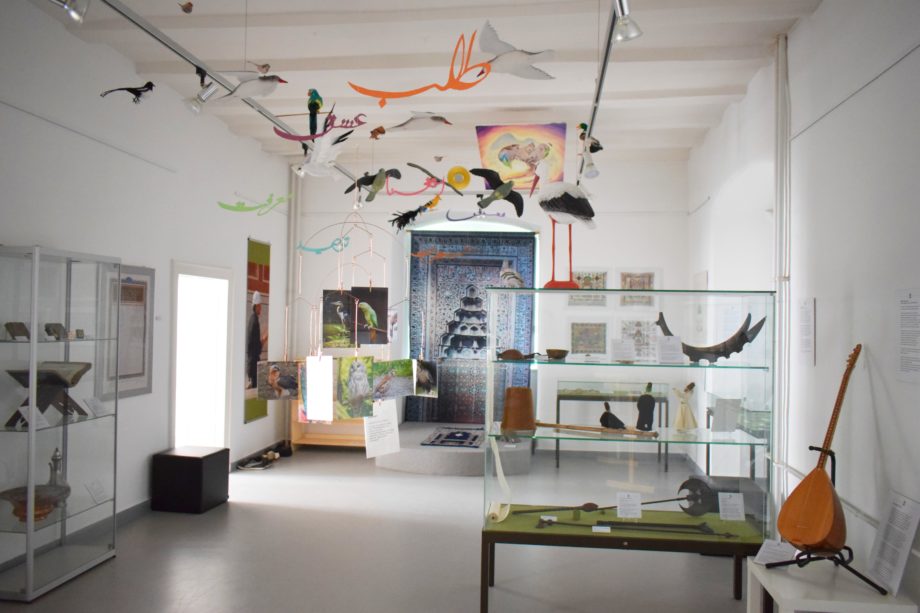
Fig. 1 Exhibition space ‘Diversity of Islam’. Photograph by Heike Luu, © Museum of Religions
Similar problems arise when it comes to objects from colonial contexts. In such cases, questions of representation also arise.
- Who should be included if the exact place of origin or previous owners cannot be determined?
- Who decides which perspectives take precedence?
- How should conflicts be dealt with if there are different views on presentation within a community?
Involving the communities of origin is, of course, not a panacea, but always requires critical consideration (Franke and Rodemeier 2025, 30–33). In the exhibition on Oceania, we opted for a participatory but reflective approach. We regard the exhibition as a ‘research laboratory’ that allows for open questions and encourages visitors to think for themselves. In addition, the exhibition concept provides for the continuation of research. A redesign of the exhibition will incorporate new findings.
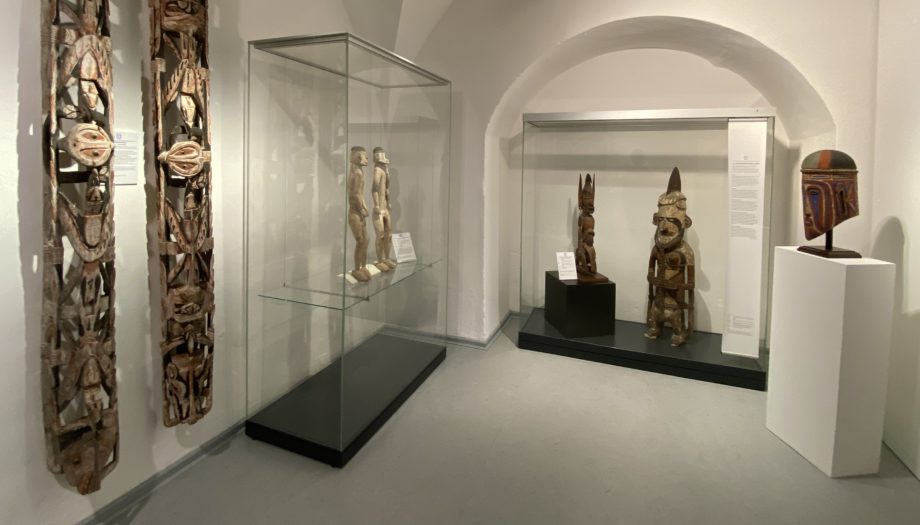
Fig. 2 View of the exhibition space with objects from Oceania. Photograph by Susanne Rodemeier, © Museum of Religions
The Oceania exhibition room: objects, origins and spiritual significance
The room currently displays seven ritual objects from New Guinea and New Ireland. Some of these objects lost their special power as soon as the ritual was over. Others are currently considered powerless because they have been removed from their ritual context. However, if they were ever returned to their place of origin, they could once again act as carriers of ancestral power.
At least one object of the exhibits, however, is considered permanently sacred. It is an ancestral figure from New Ireland, known to the locals as uli. Uli embody ancestral power, which served as mediator between the worlds during funeral ceremonies (malanggan ritual). Its spiritual power has not faded even after decades in the museum. Before the population converted to Christianity, several uli stood at the edge of the area where a funeral ritual took place. They protected the community from intruders (both visible and invisible, such as women, children or forest spirits) during the rituals. They also helped the invisible entity of the deceased to find its way to the ancestors (Rodemeier 2021; Beaulieu 2021).
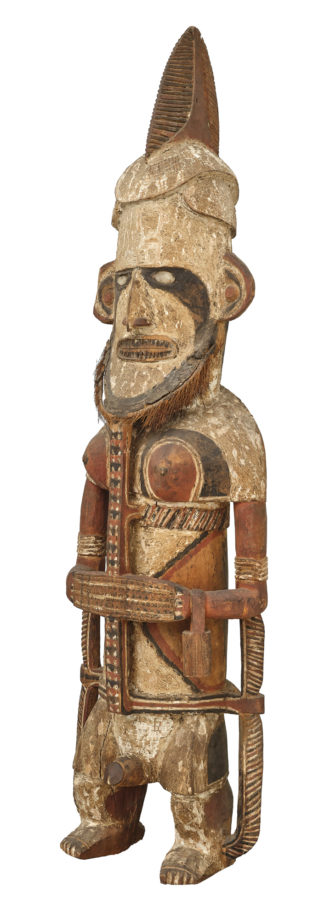
Fig. 3 Uli – A powerful ancestor from New Ireland, Photograph by Georg Dörr, © Religious Studies Collection; Inventory number: RS As 034.
Another example is a battle shield from the Sepik River in Papua New Guinea. It was carved by ancestors and decorated with mythical motifs. Crocodile and wave motifs symbolise the creation of the world on the back of the animal lying in the water. The shield was intended to protect its bearer in the battle-field. The loss of the shield meant the loss of protection by the ancestors, as from an emic perspective, such an object is a powerful and lasting ‘container’ of the presence of the ancestors (Kaufmann, Peltier and Schindelbeck 2015, 310).
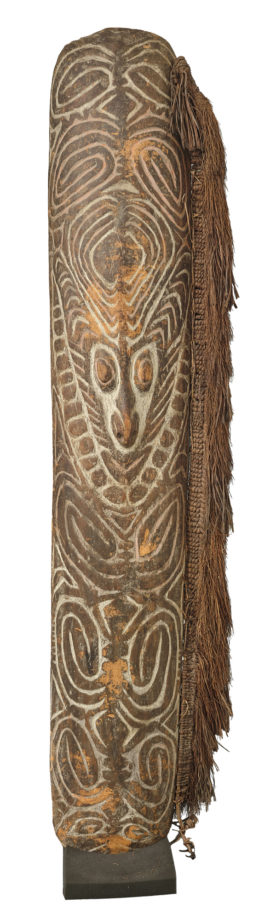
Fig. 4a Front of a battle shield. Photo by Georg Dörr, © Museum of Religions; inventory number: RS As 039.
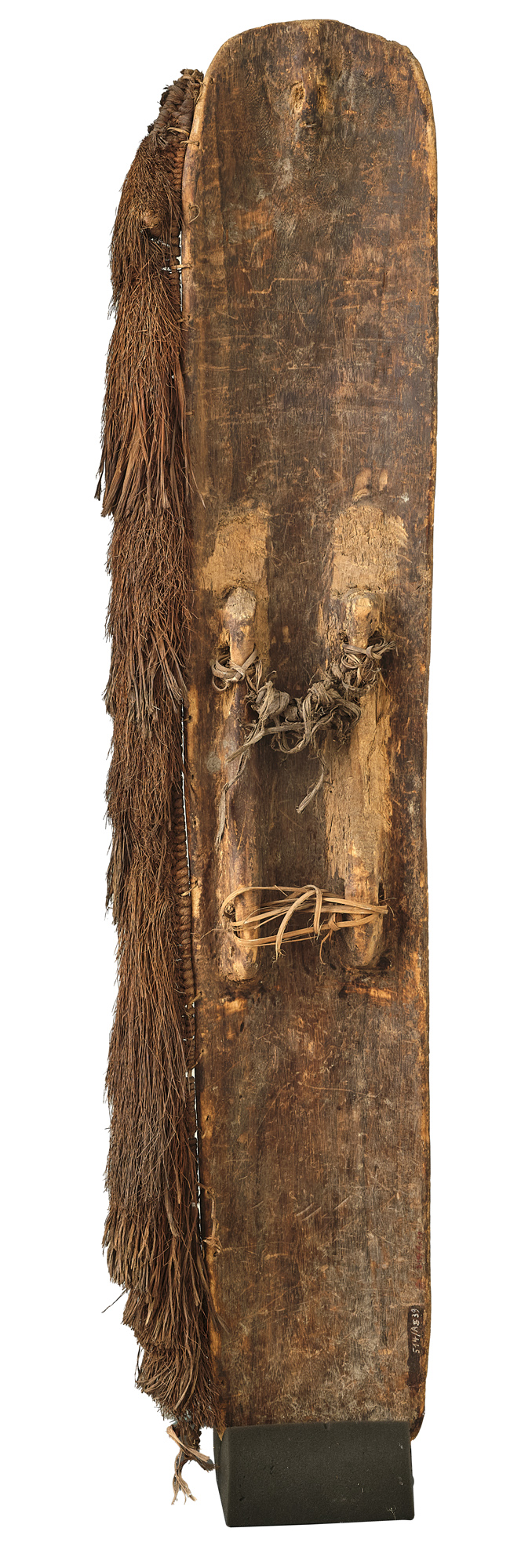
Fig. 4b Back of a battle shield. Photo by Georg Dörr, © Museum of Religions; inventory number: RS As 039.
Another special exhibit is a human skull from the Sepik River that has been ritually covered with clay. Such a skull is regarded by its descendants, who still remember the deceased, as a transitional object between the living and the ancestors. For many decades, human skulls have not been ritually processed on the Sepik and are no longer kept in people’s homes. Nowadays they are not interested in their return. Several museums in Europe have consulted people in the Sepik region and received the response that skulls should either not be exhibited at all or should be displayed respectfully, for example surrounded by ancestors, i.e. figures and other objects from the same region (Voogt 2025).[i]
This means that, from an emic point of view, objects such as the embodiment of ancestors in a figure or a shield are attributed greater spiritual power than human skulls. They are considered permanent ‘containers’ of ancestral power, while skulls might be seen as temporary resting places for a recently deceased person, being still in the world of their descendants. For European visitors to a museum, this concept is not easy to comprehend (Beaulieu 2021).
The ‘Oceania Exhibition Room’ reveals the colonial context of the exhibits, all of which were purchased from dealers such as Gustav Umlauff (Thode-Arora 1992), who most likely obtained some of the artefacts from Protestant missionaries. All of the artefacts originate from the former German colony once named ‘German South Sea’ and were brought to Germany over 100 years ago, although they were not acquired for the collection until the 1930s. The exact circumstances surrounding the appropriation of the objects and the remains of ancestors during the colonial period are unknown. All these questions are addressed in the exhibition. However, a particular curatorial challenge is to recognise some of these artefacts as ‘subjects’ bearing an own spiritual power. Although this focus has always been part of the exhibition, it has only recently been formulated as a specific requirement for guided tours.
Curating for the shift in viewpoint: a test
One important aim of the exhibition only became particularly clear to me during guided tours: visitors should be introduced to the emic perspective. The following strategies are ideas that are to be tested in a newly designed exhibition. These tests will be carried out by using a) spatial staging, b) visual as well as c) narrative approaches.
a) Spatial staging: Positioning uli
The uli could stand freely in the room instead of being displayed in a showcase. Due to its ritual task of facilitating the transition of the recently deceased to another sphere, it could be placed in the exhibition space near one of the two room openings, either near the door or in front of the window. Its position near an opening with a view of the entire room would reflect its role as a mediator between worlds. Since the window niche consists of a slightly raised platform, this location would further emphasise the spiritual significance of the figure. The figure’s gaze could be directed towards the skull, while the skull, as before, looks at the battle shield. This clarifies the hierarchy of meanings.
b) Visual approach: symbolism without words
The use of colour coding (e.g. green for ancestral power) could highlight the uli, the shield and the skull as those to which permanent ancestral power is attributed. At the same time, texts about objects that have lost their transcendent power at the end of a ritual could be written in a different colour, such as blue. In addition, multisensory elements could also be highlighted more clearly. For example, the existing QR code linking to a film from a New Ireland burial ritual is currently overlooked. Highlighting it with colour coding that also leads visitors to a power-point-presentation on provenance research concerning this very uli (Rodemeier 2021). Both might be recognized more easily when they are integrated into the colour coding.
c) Narrative approach: stories instead of labels
In addition, representatives of the community from which the objects originate could be invited to explain the objects at audio stations. For example, an elder could explain why uli were housed in their own huts (Krämer 1925, 63 fig. 12) and why there are no uli anymore in New Ireland.
Curatorial challenges and ethical considerations
The exhibition space on Oceania demonstrates that curating spiritual presence is less about providing definitive answers and more about creating conditions for reflection. Objects such as an uli and the battle shield invite visitors to question their own cultural and religious assumptions. Treating curation as a research process makes it possible to foreground emic perspectives and to open sustained conversations about the ethical, spiritual, and historical dimensions of museum practice.
Visitor responses reveal how different spiritual presence can be perceived, underscoring the need for ongoing reflection and iterative redesign. Spatial arrangements, for example, can be tested directly in the exhibition by asking visitors, including school groups, how different placements influence their experience.
These practical adjustments do not resolve deeper structural questions. Exhibitions involving objects from colonial contexts require decisions about whom to consult. When the exact origins of objects are unknown, questions of representation become even more complex. Should missionaries with long-term regional experience be involved, or museum representatives in the countries of origin, or local scholars, or village elders? Communities themselves hold differing views: some demand the return of certain objects, while others value knowing that they are preserved in European museums.
A striking example comes from an elder from a village on the Sepik River, who praised a Dutch exhibition for presenting a skull surrounded by ancestral figures. He regarded this as respectful and appreciated that the museum could provide an environment no longer possible in his (Christian) village, where ancestral figures have disappeared.
Evaluation and conclusion
Feedback from university courses, guided tours, and workshops indicates that the current presentation requires revision. Many visitors report that only through guided explanations did they begin to imagine an emic perspective on uli, and also on the skull. Such comments support the idea of rearranging the room. Placing uli in the window niche so that it faces the skull, for instance, may help visitors better understand what the “power of ancestors” could mean.
Guided tours also revealed that the skull’s presentation needs further contextualization. It is currently displayed in a showcase partially covered with frosted glass film. Some visitors find this too restrictive, others consider it respectful, and still others follow the German Museum Association’s recommendation not to display human remains at all. As a compromise, currently the skull is shown only during guided tours.
The presentation is intended to stimulate reflection on unresolved questions: Should the skull be removed to comply with guidelines, or displayed more prominently to highlight the ambivalence of its presence? What are the advantages and disadvantages of each mode of display? And how should similar questions be addressed for uli that, from the perspective of the people of New Ireland, embody ancestral presence? Because opinions differ widely, the manner of presentation must be reviewed regularly.
Long-term goals
Ultimately, the exhibition aims to encourage visitors not only to accept but to actively understand non-European ways of thinking. The uli, the battle shield, and the skull can help visitors recognize how spiritual power is conceptualized in different cultural contexts. Strengthening the emic perspective is therefore central to future presentation strategies. While curators must make final decisions, consultation with people for whom the objects hold religious, cultural, or historical significance remains essential.
When visitors begin to understand why certain objects are considered spiritually powerful, and how these understandings differ from European assumptions, the exhibition will have achieved a significant milestone already.
References
Beaulieu, Jean-Philippe 2021. Uli: Powerful Ancestors from the Pacific. Sandton: Primedia.
Fitz, Celica, Anna Matter, Johanna Osse and Lea Diehl, eds. 2018. SinnRäume: Einblicke in gelebte Religiosität in Deutschland [Spaces of Meaning: Insights into Lived Religiosity in Germany]. Marburg: Religionskundliche Sammlung.
Franke, Edith and Susanne Rodemeier. 2025a. “Dynamiken religiöser Objekte in musealen Ausstellungen und Sammlungen [‘Dynamics of Religious Objects in Museum Exhibitions and Collections’].” In Religion im Museum. Dinge arrangieren, Artefakte präsentieren, Räume inszenieren [Religion in the Museum: Arranging Things, Presenting Artefacts, Staging Spaces], edited by Rita Burrichter, Antje Roggenkamp, Sonja Keller, and Sarah Justus, 21–42. Bielefeld: Transcript.
Franke, Edith and Konstanze Runge. 2013. Von Derwisch-Mütze bis Mekka-Cola: Vielfalt islamischer Glaubenspraxis [From Dervish Cap to Mecca-Cola: Diversity of Islamic Religious Practice]. Marburg: Religionskundliche Sammlung.
Franke, Edith, Susanne Rodemeier and Alisha Meinghaus. 2023. Jüdisches Leben in Marburg [Jewish Life in Marburg. Expanded exhibition catalogue]. Bielefeld: Transcript.
Kaufmann, Christian, Philippe Peltier, and Markus Schindelbeck. 2015. Tanz der Ahnen: Kunst vom Sepik in Papua-Neuguinea. München: Hirmer.
Krämer, Augustin. 1925. Die Malanggane von Tombara. München: Georg Müller Verlag.
Otto, Rudolf. 1917. Das Heilige. Über das Irrationale in der Idee des Göttlichen und sein Verhältnis zum Rationalen. [The Idea of the Holy: An Inquiry into the Non-Rational Factor in the Idea of the Divine and its Relation to the Rational] Breslau: Trewendt & Granier.
Rodemeier, Susanne. 2021. Objects from Colonial Contexts: Limits and Potentials of their Musealization. Video publication in the collection Religious Materials: Emic Perspectives – Etic Constructions – Museum Classifications, REDIM Conference 2021. Direct link to the talk: https://doi.org/10.17192/es2022.0004; Link to the full collection: https://open.uni-marburg.de/handle/10.17192/es.2021.0018
Thode-Arora, Hilke. 1992. “Die Familie Umlauff und ihre Firmen – Ethnographica-Händler in Hamburg.” Mitteilungen aus dem Museum für Völkerkunde Hamburg 22: 143–158.
Voogt, Paul. 2025. An Uncomfortable Possession. Modeled skulls in a mission museum: their provenance and their shifting meaning over time. Missiemuseum Steyl. https://doi.org/10.5281/zenodo.17092725
[i] Personal communication with Michael Kraus, curator of Ethnographic Collection at University of Göttingen, Germany when giving a talk in Marburg: Bericht zur Auftaktveranstaltung “Uneindeutig sensibel – Erfahrungen bei der Arbeit mit einer Universitätssammlung” (Dr. Michael Kraus) – Nachrichten – Agency und Ethik – Sensible Objekte in Hochschulsammlungen – Philipps-Universität Marburg. Also Paul Voogt’s recent research results: https://www.nationalgeographic.nl/geschiedenis-archeologie/a63699403/papoea-nieuw-guinea-schedels-missiemuseum
Susanne Rodemeier is an anthropologist of religion who specializes in local Indonesian religions and their coexistence with Christianity and Islam. She has been the curator at the Museum of Religions/Religionskundliche Sammlung and Wissenschaftliche Mitarbeiterin at Philipps-University Marburg since 2018. She teaches BA and MA seminars focusing on the materiality and visuality of religion. She has a particular interest in researching the provenance of objects from colonial and missionary contexts in Indonesia, Oceania, and African countries. She was a research fellow on the interdisciplinary project REDIM (Dynamics of Religions in Museums) and is currently a fellow of AESOH (Agency and Ethics: Sensitive Objects in University Collections). Her most recent publications focus on topics connected with object and provenance research.